
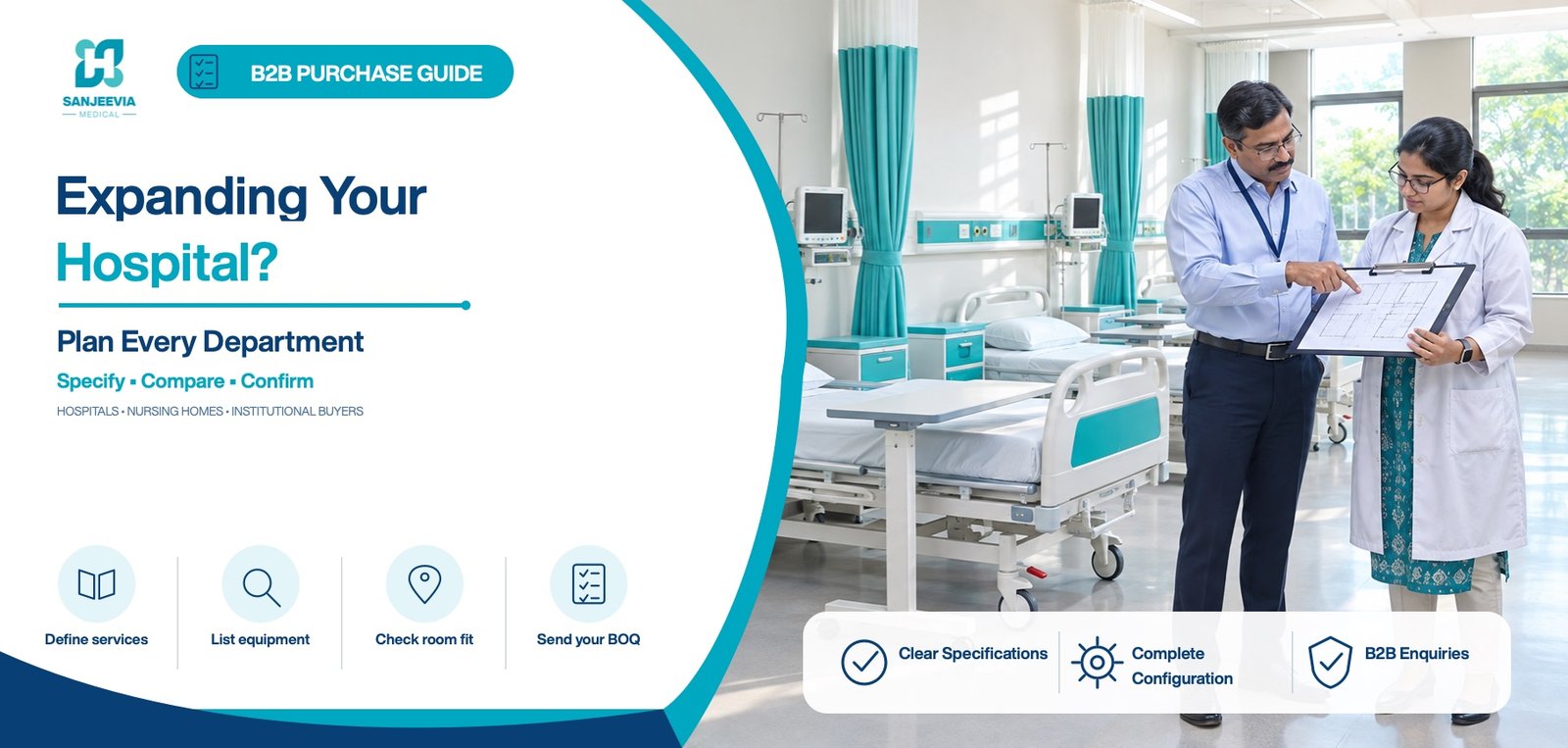
Prepared for Indian institutional buyers, clinics, dealers and distributors. Updated 8 November 2026.
A hospital expansion equipment purchase plan should explain what each department needs, how the equipment will be used and what must be ready before the new area opens. Hospitals, nursing homes and day-care centres in India often combine additional beds with observation spaces, consultation rooms or rehabilitation services. Buying the visible equipment first can leave the project waiting for a compatible mattress, bedside accessory, power connection or approved monitoring configuration. This guide helps administrators and purchase teams turn an expansion brief into a practical bill of quantities, or BOQ, that they can review internally and send to Sanjeevia.
Build a complete bedside requirement
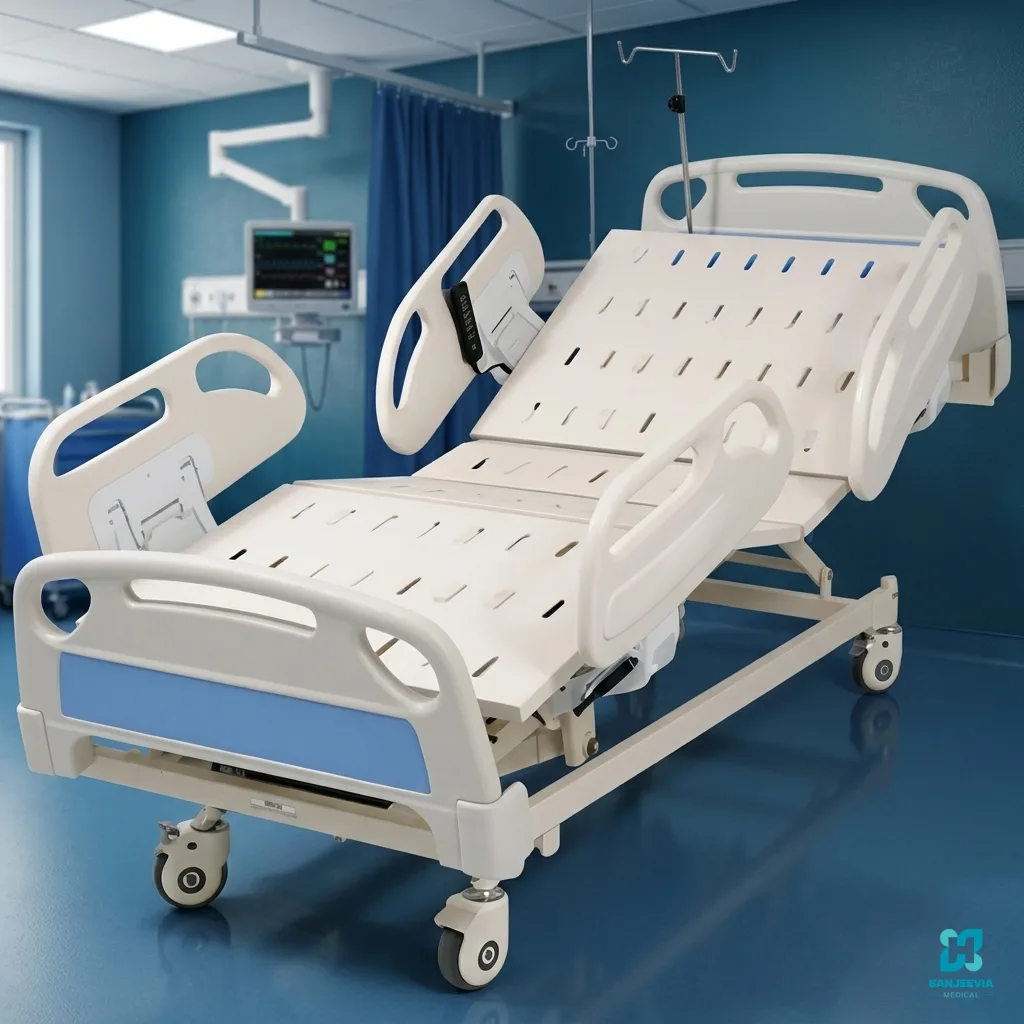
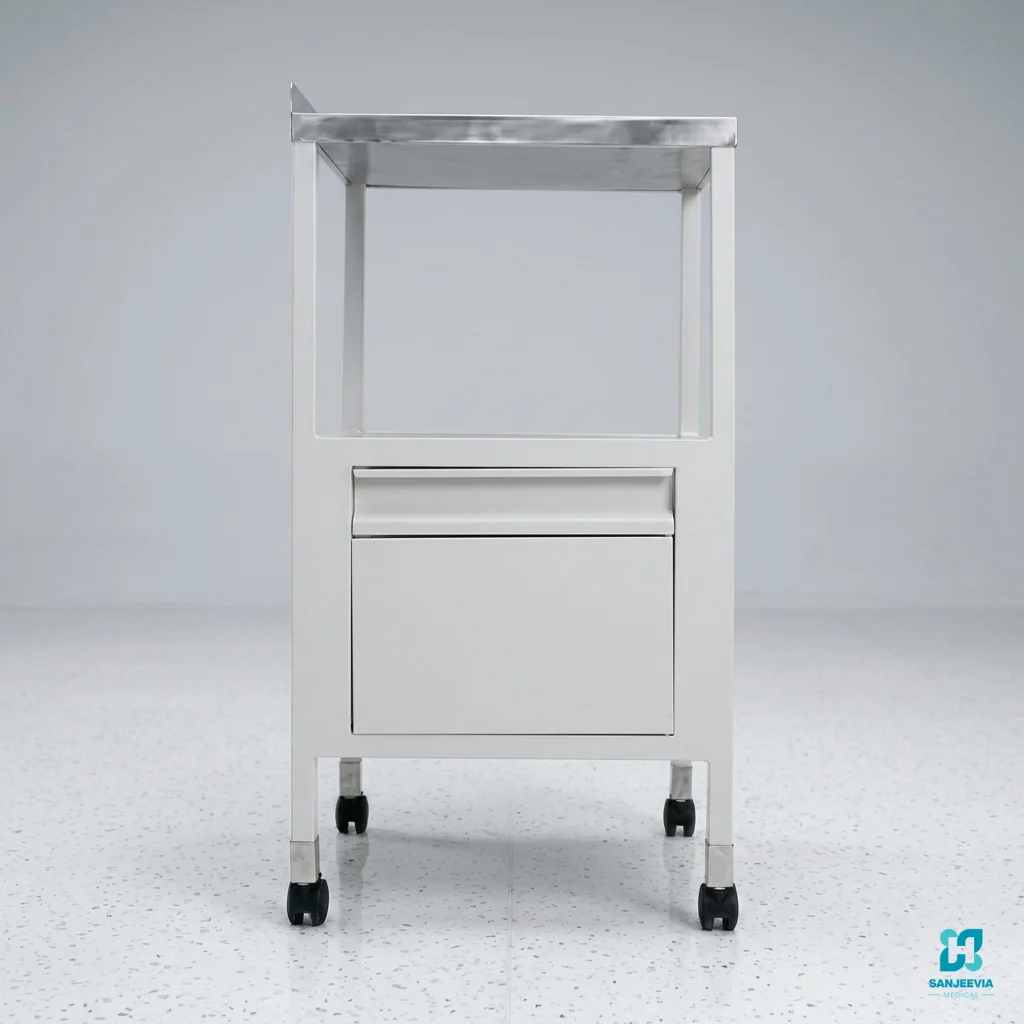
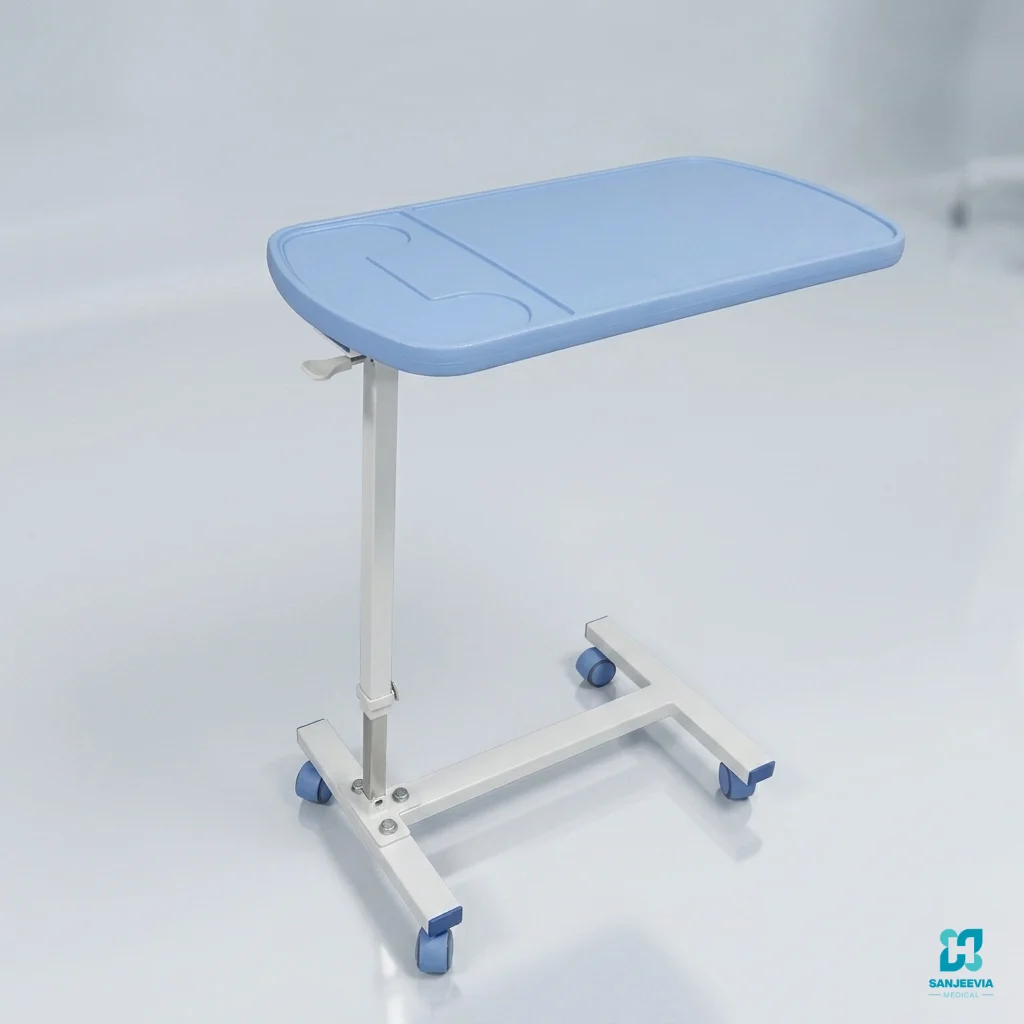
Review these Sanjeevia products, then confirm the exact configuration and quantity in your B2B enquiry.
1. Define what the expansion will actually provide
A new ward, a procedure area and a rehabilitation room have different equipment requirements. Write down the services, patient groups, intended capacity, staffing arrangements and opening sequence before choosing products. An extra bed does not by itself create a functioning clinical service.
For each proposed space, ask the department head to describe the work performed there. Then translate that work into equipment functions. For example, observation needs may require an approved monitoring plan, while a mobility assessment area needs suitable space and the correct mobility aids.
India’s Clinical Establishments standards resources provide facility and service references. Applicability depends on establishment type, state requirements and the services provided. Use the relevant requirements with your clinical and project teams. If you are opening a clinic rather than expanding a hospital, start with our new clinic equipment planning guide.
2. Divide the list into three purchasing groups
Use the groups below to prevent shared items being purchased once for every bed, or essential bedside items being treated as a shared resource. The group does not decide clinical quantity by itself. It gives your team a clearer way to approve quantities.
| Group | Examples to review | Quantity decision |
|---|---|---|
| Bedside items | Approved bed, compatible mattress, bedside locker and over-bed table | Planned positions, room layout and local care workflow |
| Shared equipment | Patient mobility equipment, selected trolleys and other shared support items | Simultaneous demand, travel distance, cleaning turnaround and backup need |
| Department-specific devices | Monitors, suction machines, infusion devices and respiratory equipment where clinically required | Approved service capability, patient needs and clinical supervision |
For bedside planning, compare the actual functions and dimensions in Sanjeevia’s hospital bed range. Count complete usable bed positions, including the mattress and selected accessories, rather than bed frames alone.
3. Write each BOQ line as a complete configuration
A line reading ‘electric bed, quantity 10’ leaves important questions unanswered. Specify the required functions, overall footprint, mattress platform, stated load rating, side structures, handset arrangement, power requirements and included accessories. Confirm the meaning of the manufacturer’s load rating rather than treating different labels as interchangeable.
For a monitor, record the required parameters, patient group, included cuffs and probes, mounting arrangement and battery requirement. A description such as ‘5 para monitor’ does not establish that every quoted configuration is equivalent. Use the patient monitor product page as a starting point for an equipment enquiry, then confirm the offered configuration in the quotation.
Give each line a unique reference. Ask everyone responding to your requirement to use that reference and list deviations separately. This lets your team compare the same clinical requirement across commercial responses.
4. Match the equipment to the room before ordering
Check the route into the building as well as the final room. Lift size, door clearance, corridor turns, floor space and the ability to operate or service the equipment all matter. Use the proposed model’s overall dimensions, not a photograph or an assumed standard size.
At the bedside, review the combined arrangement: bed, mattress, locker, table, equipment stands and space for staff movement. A height-adjustable over-bed table must work with the selected bed height and base. A bedside locker should remain accessible without obstructing the care route.
Ask the authorised engineering and clinical teams to approve power, earthing, ventilation, medical-gas connections where relevant and backup requirements. Product electrical requirements should be checked against the exact manual before installation. Record any building work separately from the equipment list so neither task is forgotten.
5. Phase purchases around readiness and acceptance
Organise the BOQ into opening-critical, capacity-building and later-phase items. The clinical team should decide what is essential for the service to open. Later-phase classification should never remove equipment needed for safe operation.
For each phase, set a required installation and acceptance date. Work backwards from that date for approvals, configuration confirmation, room readiness and staff demonstration. A delivery date alone does not tell the department when the item will be ready for use.
During temporary demand or renovation, you can also discuss institutional equipment rental with Sanjeevia. Rental and procurement have different terms and service coverage; confirm the suitable arrangement for the project location in writing.
Copy this department-wise purchase worksheet
Use one row for each configuration. Duplicate the row when the same category requires different sizes, accessories or settings in another department.
| BOQ field | What to enter |
|---|---|
| Reference and department | Unique line number, room or ward, department owner |
| Intended use | Function required and relevant patient group |
| Quantity basis | Bed positions, simultaneous demand or approved backup requirement |
| Minimum specification | Functions, size, capacity, power and required compatibility |
| Complete configuration | Main device, accessories, mounting, mattress or other required items |
| Documents | Manual, applicable product evidence, warranty and acceptance record |
| Phase and date | Opening-critical or approved later phase; ready-for-use date |
| Acceptance owner | Department and authorised person approving the delivered configuration |
The Department of Expenditure procurement manuals are useful Indian references for disciplined specifications and purchasing records. Public procurement rules apply within their own scope; private buyers can adapt the planning principles to their purchase procedures.
What to send Sanjeevia for an expansion requirement
Send the worksheet through our B2B enquiry page with your organisation name, department list, quantities, project city and pin code, required phase dates and preferred models or specifications. Flag items requiring a demonstration, installation or a particular accessory configuration.
Sanjeevia’s institutional team can review the requirement and prepare an itemised proposal. Your department can then review model differences, accessories, warranty terms and applicable documentation before approving the order. Procurement availability and location coverage are confirmed for the specific requirement.
Frequently asked questions
Is there one equipment list for every hospital expansion?
No. The list depends on the approved services, patient groups, staffing, layout and applicable requirements. A ward, day-care centre and critical-care area require different planning.
How should a hospital calculate equipment quantities?
Use bedside positions for genuinely dedicated items and an approved demand assessment for shared equipment. Include simultaneous use, cleaning turnaround, backup requirements and existing usable assets.
Can we send an incomplete BOQ to Sanjeevia?
Yes. Share the information already available and identify the gaps. Sanjeevia can clarify equipment details for the proposal, while clinical suitability and facility requirements remain subject to your authorised team’s approval.
Can hospitals and dealers outside Delhi NCR enquire?
Yes, institutional procurement enquiries can include locations across India. Confirm the offered products, availability, installation and support coverage for each location in the written proposal.
What should we approve before placing a bulk order?
Approve the exact configuration, quantity, room fit, accessories, documents, warranty, installation scope and acceptance process. Keep the final approved BOQ with the purchase record.
Banner: illustrative scene, not a photograph of a Sanjeevia facility or a specification for a particular model. Confirm product specifications and project scope in the written quotation.
