
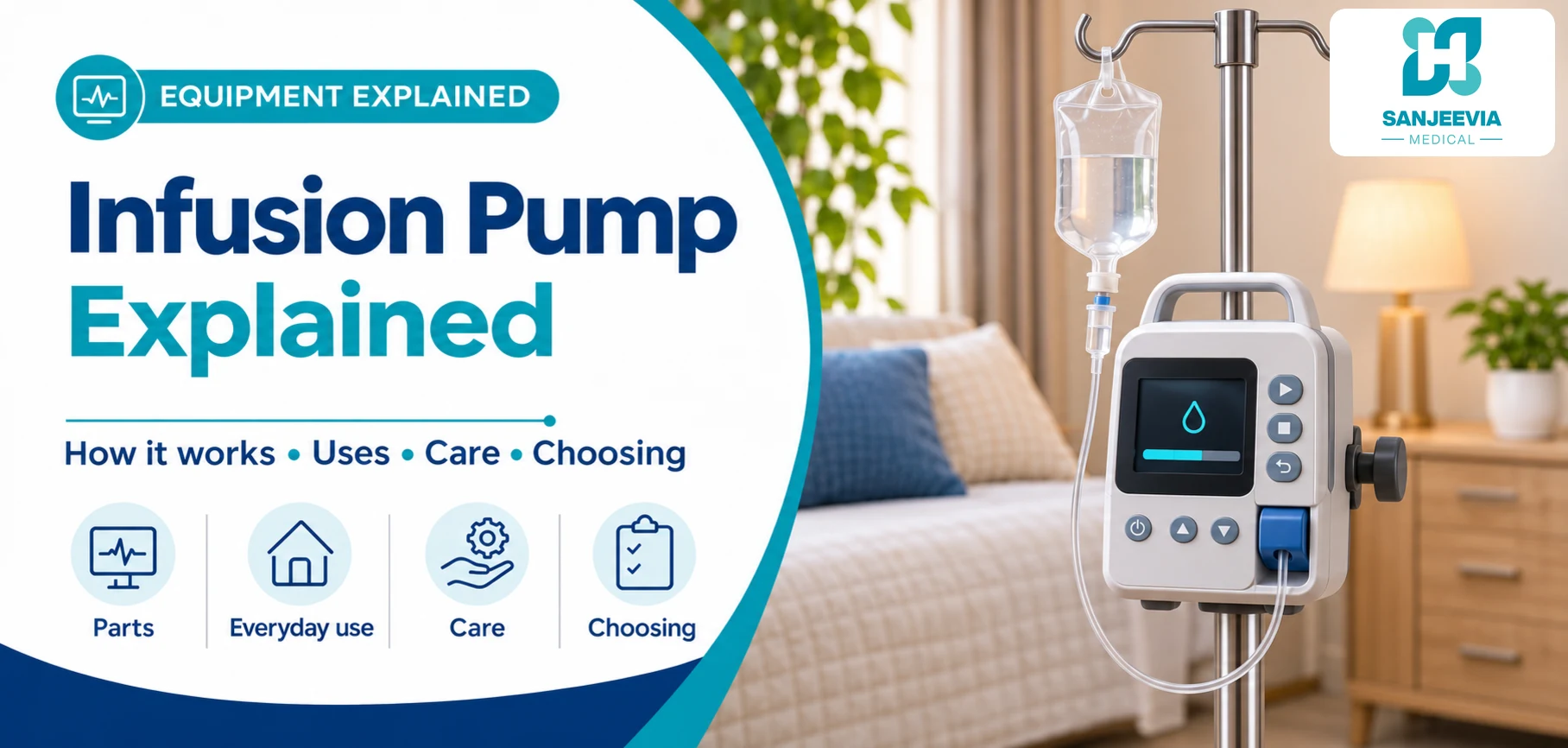
An infusion bag hanging on a pole can look as though gravity is doing the work. A volumetric pump adds controlled movement and alarms—but it still depends on the correct tubing, programming and patient monitoring.
Quick answer: A volumetric infusion pump moves fluid from a compatible bag or bottle through an administration set at a programmed rate. It may deliver prescribed fluids, nutrition or medication. A trained professional must prepare the therapy, load the approved set, programme and check the pump, and monitor the patient and access site.
Explore relevant equipment
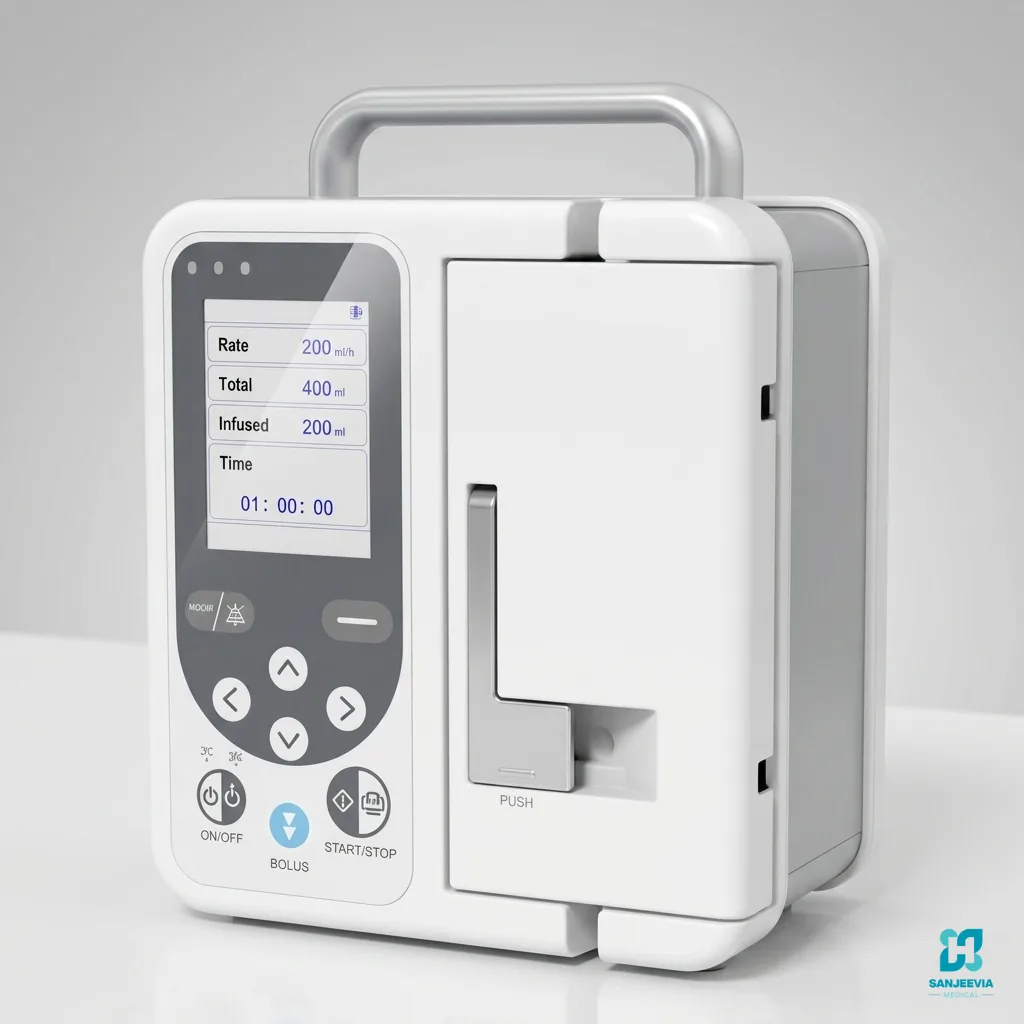
Infusion Pump
Volumetric infusion pump with power cable, one initial IV set and pole-hook attachment in the listed package. Confirm the exact validated set.
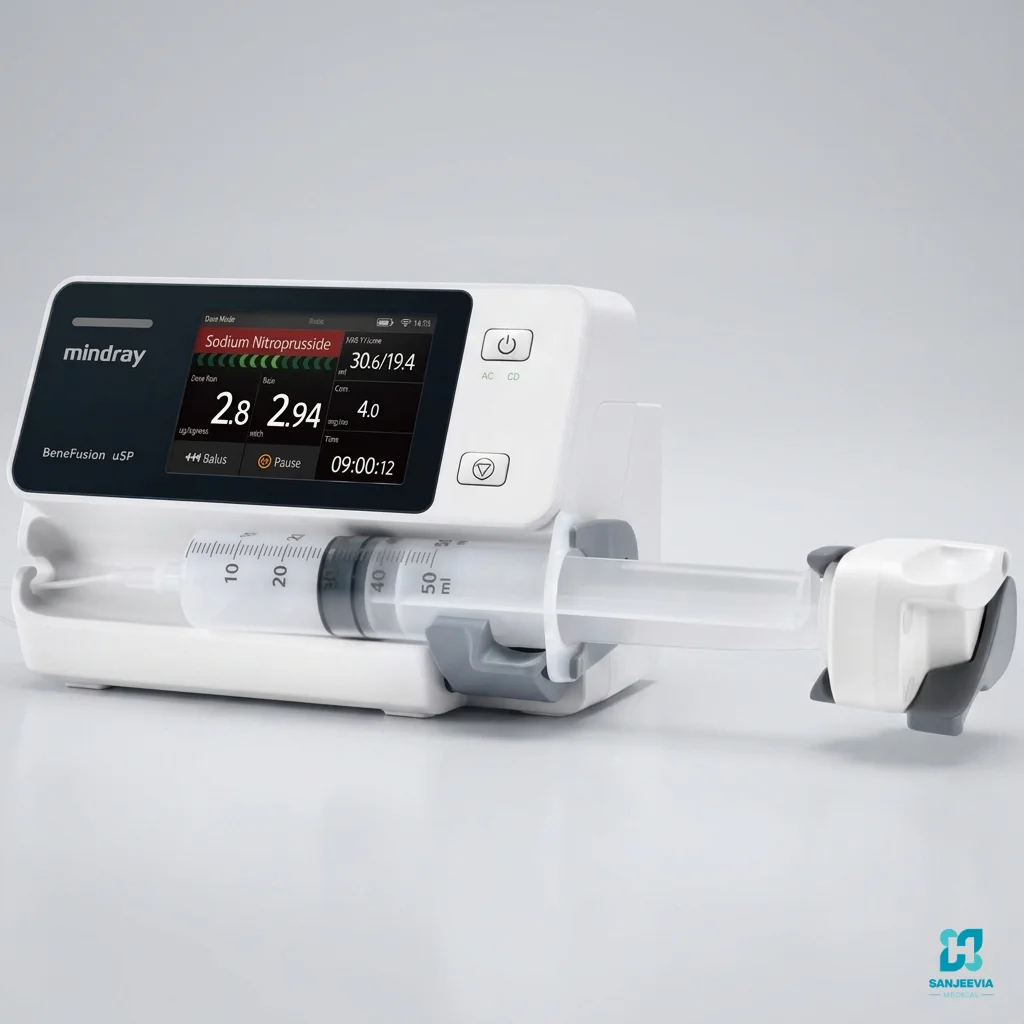
Syringe Pump
Syringe pump for selected low-volume delivery. It uses a syringe and is not automatically interchangeable with a volumetric pump.
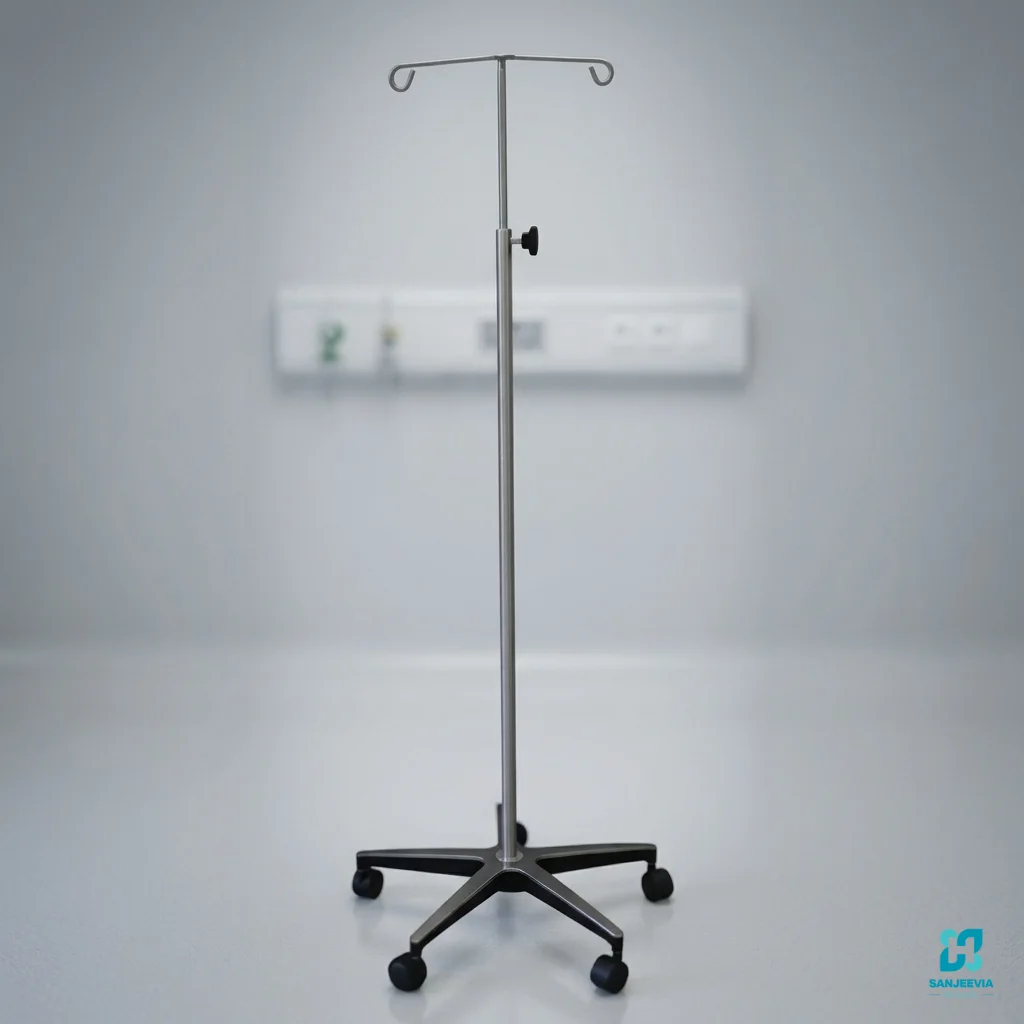
IV Stand
IV stand for suspending a bag in a clinician-led setup. Confirm stability, height and the approved pump mounting arrangement.
Open each product page for the current rental or purchase options and package details. Confirm the exact supplied model, compatible accessories and delivery availability for your PIN code.
Need a infusion pump demonstration? No matching demonstration was available on Sanjeevia’s YouTube channel at this update. Request a hands-on demonstration of the supplied model from the responsible trained professional and use the manufacturer’s instructions. You can browse Sanjeevia’s current equipment videos.
Jump to equipment details
How does a volumetric pump move fluid?
Many volumetric pumps use a mechanism that repeatedly compresses a section of compatible tubing, moving a measured amount of fluid forward. The user programmes a rate, commonly in mL/hour, and a volume to be infused or another authorised endpoint.
The bag remains the reservoir. The pump controls movement through the loaded administration set, but it does not confirm the bag contains the correct fluid or that the IV catheter is working. Medication identity, concentration, route and patient monitoring remain clinical responsibilities.
Different pump families require specific tubing sets. A set that fits inside the door may still have the wrong dimensions or anti-free-flow design. Use only sets validated for the exact model.
Volumetric, syringe, enteral and ambulatory pumps
| Pump type | Reservoir and purpose | Do not assume |
|---|---|---|
| Volumetric pump | Bag or bottle with a compatible set; controlled larger-volume delivery. | That every IV set or medicine is compatible. |
| Syringe pump | Compatible syringe; controlled low-volume delivery. | That the same prescription can be moved between pump types. |
| Enteral feeding pump | Nutrition delivered into the digestive tract using enteral tubing. | That an IV infusion pump can be used for enteral feeding. |
| Ambulatory pump | Portable or wearable design for a defined therapy. | That a bedside pump is safe to carry without an approved transport setup. |
The FDA uses “infusion pump” as a broad category. Sanjeevia’s listing is a volumetric pump, so this article focuses on bag-and-tubing delivery.
What should be checked before the door closes?
Identify the pump door, tubing channel, pumping segment, air detector where present, clamp or anti-free-flow protection, display, start and stop keys, alarm light, battery indicator and pole clamp. The approved set must be loaded in the correct direction and fully seated.
The fluid container, medication, catheter, most ongoing administration sets, swabs and gloves are separate patient supplies. Confirm whether one initial IV set in the product package is actually compatible with the assigned model and prescribed therapy.
Before starting, the trained user traces the line from bag to patient, confirms labels and units, checks clamps and connections, and independently verifies high-risk programming according to policy.
Air, occlusion and empty-bag alarms: what they can and cannot do
An air-in-line alert may indicate detected air or an incorrectly loaded set. An occlusion alert indicates resistance somewhere in the flow path. A near-empty or end alarm relates to the programmed or detected endpoint. Exact messages and responses vary by model.
Alarms are safeguards, not guarantees. Sensors can be affected by loading, tubing or device faults, and nuisance alarms can lead to dangerous complacency. Assess the patient and line, read the message and use the trained procedure; do not disable a detector or keep restarting an unexplained alarm.
The FDA has documented risks from software, broken components, battery failures and confusing interfaces. Remove damaged or unreliable equipment from use and activate the backup plan.
What does clinician-led home infusion require?
- A written order covering fluid or drug, concentration, route, rate, total volume, duration and required monitoring.
- A trained service that prepares the bag, establishes and cares for the access, loads the approved set, programmes the pump and verifies delivery.
- Clear responsibilities for bag changes, line checks, observations and documentation. Caregivers should know exactly what they may and may not do.
- A 24-hour contact and a plan for alarms, leaking or painful access, missed doses, battery failure, pump damage and urgent symptoms.
- Adequate supplies, safe storage, sharps and waste arrangements, and an approved transport plan if the patient must move during infusion.
Home use is not made safe by the pump alone. The medicine and access route may require nursing, laboratory tests or other monitoring. Equipment rental does not supply those services unless separately agreed.
Patient and line problems need more than troubleshooting
Watch for pain, redness, swelling, leakage, bleeding, fever, chills, breathing difficulty, unusual drowsiness or a change expected in the therapy’s escalation plan. Stop or clamp only as instructed by the clinical service; the correct action depends on the medicine and access.
Never speed up an infusion to “catch up” unless the prescriber gives a new instruction. Do not flush a resistant line, remove air, reconnect a disconnected sterile line or change a drug concentration without the required training and authorisation.
An IV stand should be stable and positioned to prevent pulling and trips. Confirm the approved pump mounting arrangement, because an unstable pole can damage the pump or patient access.
At a bag or shift change, the trained clinician should trace the entire line, compare the label and programme with the current order, review volume infused and remaining, and record the check. A running symbol only confirms that the mechanism is active; it does not prove that the right fluid is reaching the right patient through a healthy access site.
Rental, consumables and power questions
Request the exact model, manual, compatible administration-set codes, pole clamp or hook, power cable, battery check and alarm demonstration. Ask about service history, preparation, fault response and replacement availability.
The current Sanjeevia listing includes the pump, power cable, one initial IV set, pole-hook attachment and handover card. Ongoing sets, bags or medication, cannula or catheter, swabs, gloves and clinical care are separate. Verify that the included set matches the delivered model and intended therapy before use.
Confirm the Delhi NCR delivery PIN code, charge, deposit, rental extension and collection terms. The home infusion-pump discharge checklist and IV stand setup guide help coordinate the complete arrangement.
Frequently asked questions
Can an infusion pump be set up from the prescription by the family?
Programming and setup should be performed and checked by the responsible trained service. The prescription alone does not teach compatible tubing, line preparation or alarm response.
Can any IV set be loaded?
No. Use the exact manufacturer-validated administration set for the supplied model and therapy.
Can it be used as a feeding pump?
Do not assume so. Enteral feeding requires equipment and connectors intended for the digestive route; misconnections can be dangerous.
Does a battery mean the infusion can continue indefinitely during a power cut?
No. Runtime varies with the unit and battery condition. Verify tested performance and an approved clinical backup plan.
Explore your equipment options
Infusion Pump
Volumetric infusion pump with power cable, one initial IV set and pole-hook attachment in the listed package. Confirm the exact validated set.
Syringe Pump
Syringe pump for selected low-volume delivery. It uses a syringe and is not automatically interchangeable with a volumetric pump.
IV Stand
IV stand for suspending a bag in a clinician-led setup. Confirm stability, height and the approved pump mounting arrangement.
Open each product page for the current rental or purchase options and package details. Confirm the exact supplied model, compatible accessories and delivery availability for your PIN code.
Sources and useful reading
- FDA: What is an infusion pump? — Pump types, mechanisms and controlled delivery.
- FDA: Infusion pumps overview — Clinical use, training, alarms and the significance of device failures.
- FDA: Risk-reduction strategies for clinicians — Programming checks, monitoring and backup plans.
- Sanjeevia: Infusion pump listing — The package and consumable distinctions referenced in this guide.
- CDSCO: Medical devices and diagnostics — Official Indian medical-device information; this is not an endorsement of an individual listing.
- NHSRC: Materiovigilance Programme of India — Information about reporting suspected medical-device adverse events in India; urgent care comes first.
Prepared by Sanjeevia’s editorial team. Updated 7 November 2026. This guide explains equipment; diagnosis, treatment, settings and patient-specific suitability must come from the responsible clinical team.
