
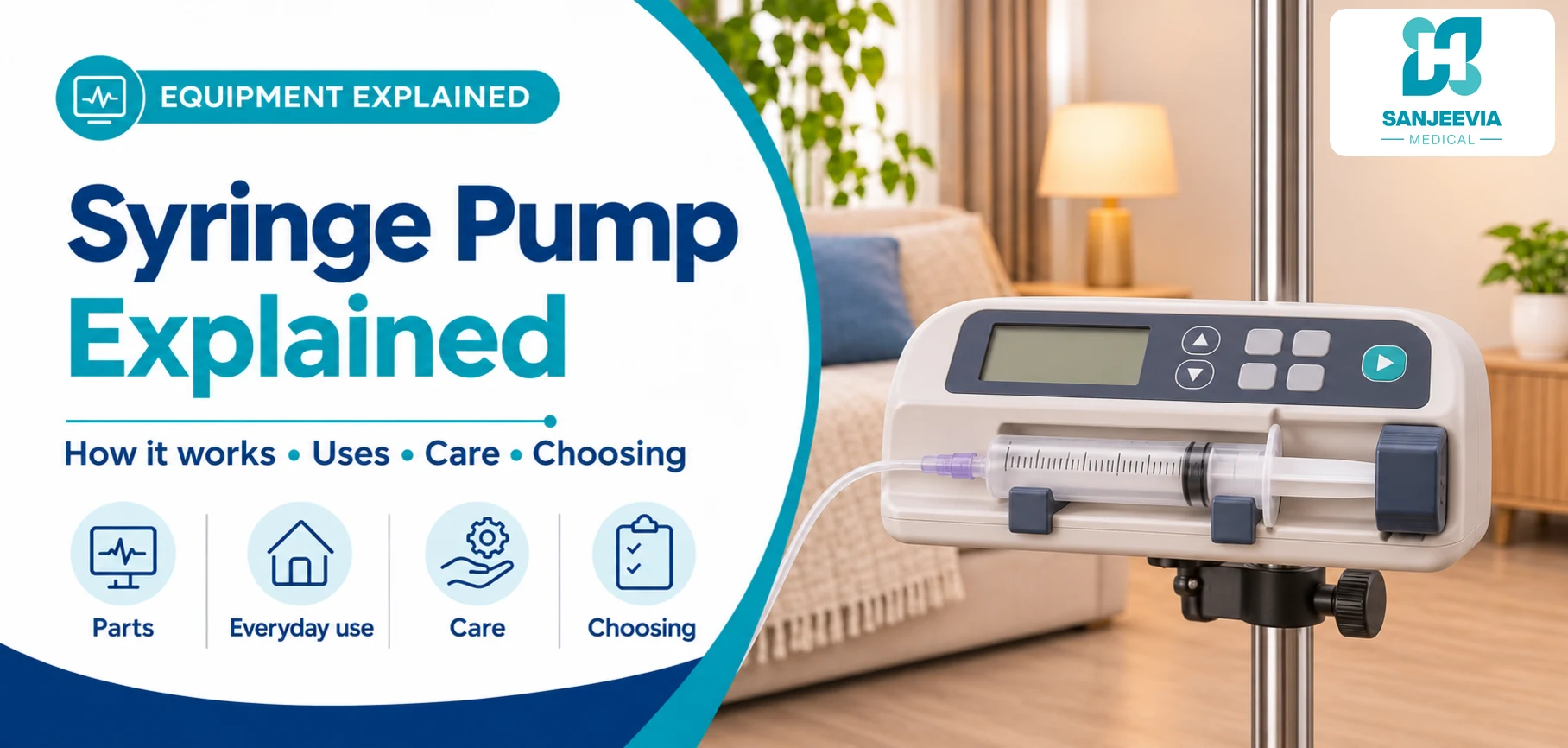
A syringe pump may move the plunger so slowly that it looks almost still. That is exactly why setup errors matter: a small programming or syringe-selection mistake can change a concentrated medicine dose over many hours.
Quick answer: A syringe pump holds a compatible syringe and advances its plunger at a programmed rate to deliver small volumes in a controlled way. It is used for prescribed medicines or fluids by trained professionals. The pump does not choose the drug, calculate an order or confirm that the IV or other access remains safe.
Explore relevant equipment
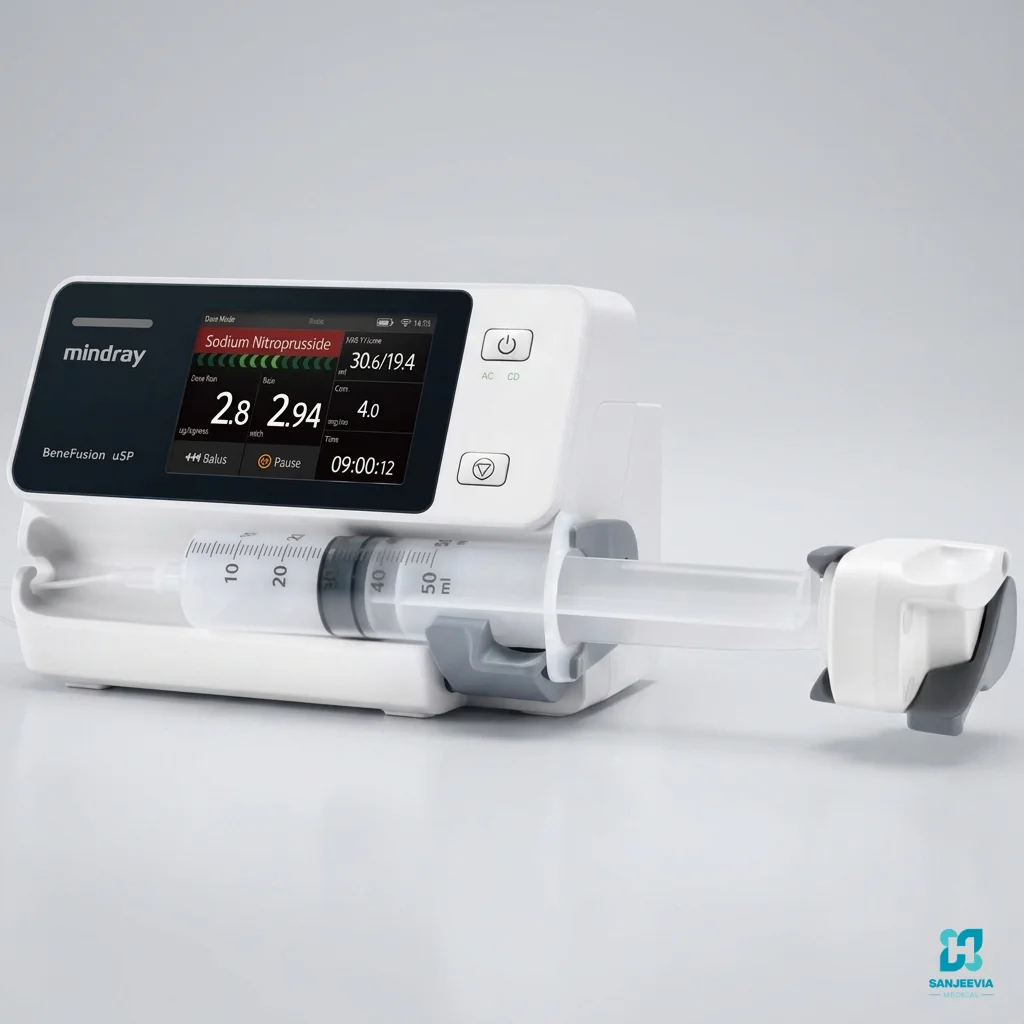
Syringe Pump
Syringe pump for controlled low-volume delivery. Syringes, medicines and extension lines are separate patient-specific supplies.
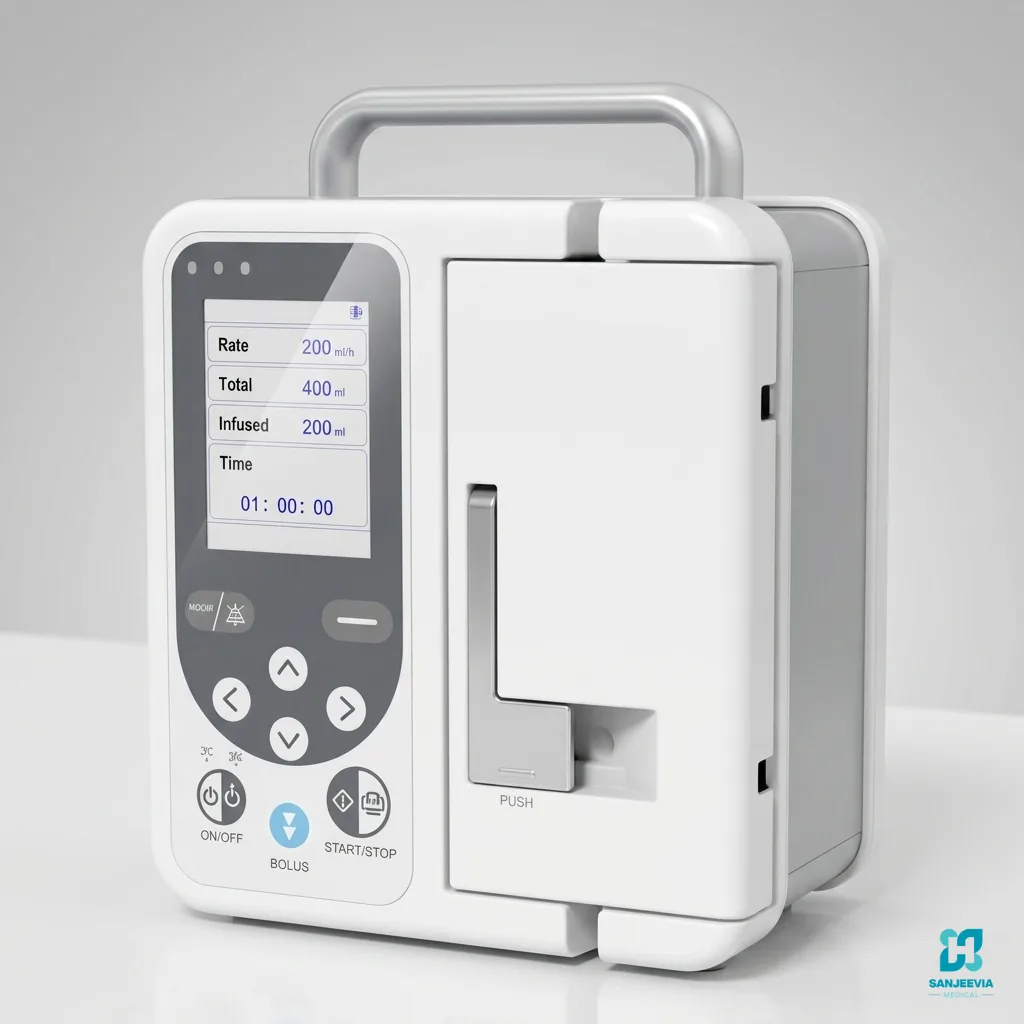
Infusion Pump
Volumetric infusion pump for compatible bag-and-tubing delivery; it is a different pump type, not an automatic substitute.
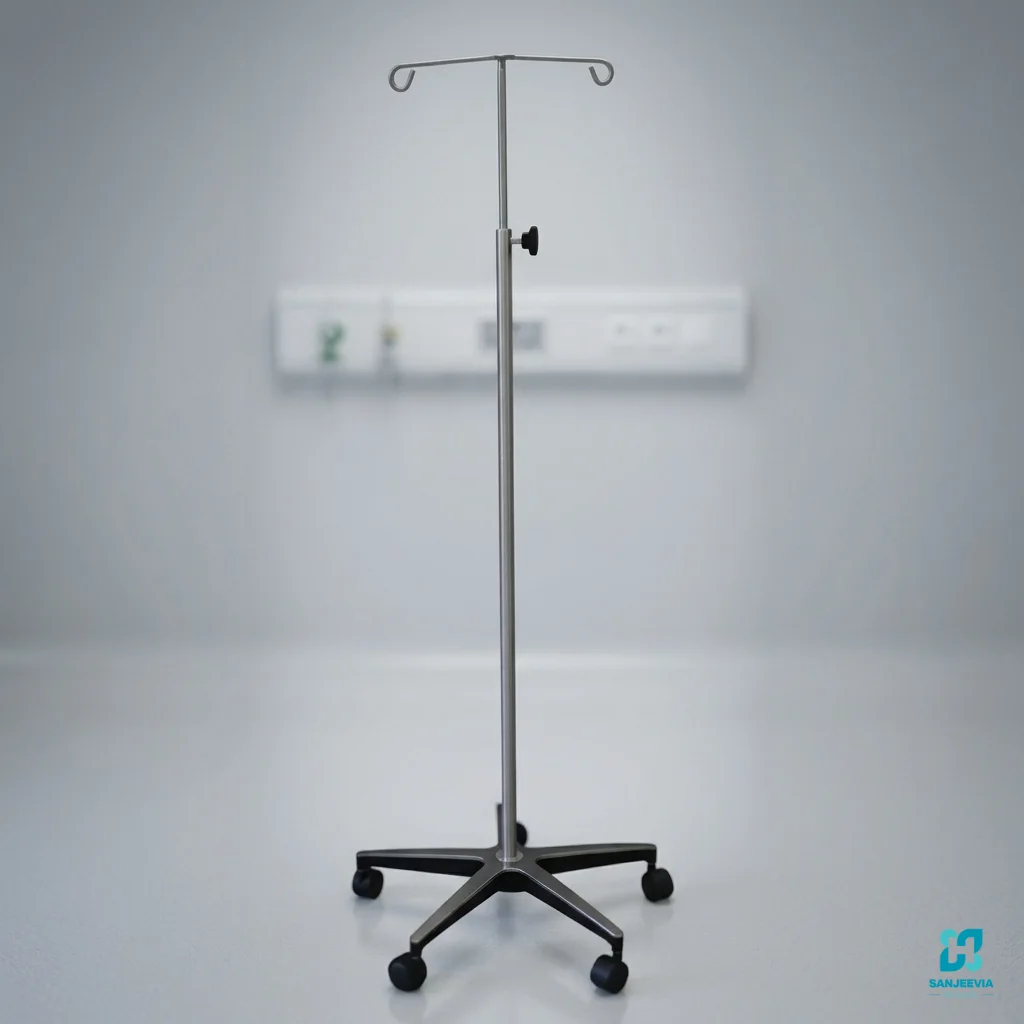
IV Stand
Related bedside support for an infusion setup. Confirm stability and the approved pump-mounting arrangement.
Open each product page for the current rental or purchase options and package details. Confirm the exact supplied model, compatible accessories and delivery availability for your PIN code.
Need a syringe pump demonstration? No matching demonstration was available on Sanjeevia’s YouTube channel at this update. Request a hands-on demonstration of the supplied model from the responsible trained professional and use the manufacturer’s instructions. You can browse Sanjeevia’s current equipment videos.
Jump to equipment details
How does a syringe pump deliver such small volumes?
The syringe barrel is secured in a holder while the plunger flange is captured by a driven mechanism. The pump advances the plunger at the programmed rate. The display may use mL/hour or a dose-based mode, depending on the model and authorised clinical workflow.
Syringe brand and size matter because the pump converts plunger movement into delivered volume using stored dimensions. A syringe that fits physically may not be validated for that model. The trained user must select and confirm the exact syringe type and size.
A pump controls movement; it does not test the medication in the syringe or verify the prescription. Labelling and an independent check are essential parts of safe medication administration.
Syringe pump versus volumetric infusion pump
| Feature | Syringe pump | Volumetric infusion pump |
|---|---|---|
| Reservoir | Compatible syringe. | Bag or bottle with a compatible administration set. |
| Typical strength | Controlled low-volume delivery. | Controlled delivery from a larger reservoir. |
| Loading risk | Wrong syringe brand/size or poorly secured plunger. | Wrong tubing set, incorrect loading or free-flow risk. |
| Interchangeability | Use only when the prescription and model support the setup. | Do not substitute simply because both display mL/hour. |
The medicine, required volume, concentration, access route and clinical environment determine the equipment. Read the syringe versus infusion pump guide for a focused comparison.
Controls and components to identify at handover
Identify the power key, syringe clamp, plunger holder, start and stop controls, display, alarm light, battery indicator and pole clamp. Ask which functions are locked for clinical use and how to confirm that delivery is actually running.
The setup also includes a prescribed syringe, medication label, extension line and patient access. These disposable or patient-specific items are not included with Sanjeevia’s pump listing. A handover card cannot replace medication orders or training.
Confirm the units on every screen. Confusing mL/hour with a dose unit, decimal placement or patient weight can have serious consequences. Programming should be performed and independently checked according to the care provider’s policy.
What do occlusion, near-empty and battery alarms mean?
An occlusion alarm can indicate resistance to flow, but the pump may have already built pressure in the syringe and tubing. A trained clinician follows the model-specific response; opening a clamp or disconnecting impulsively can cause unintended delivery.
Near-empty and end-of-infusion behaviour differs across models. Low-battery alarms also require a plan, especially during transport or a high-risk infusion. An alarm does not diagnose the cause, and silence after muting does not mean delivery is safe.
Assess the patient and infusion site as required. New swelling, leakage, pain, bleeding, altered consciousness, breathing difficulty or unexpected symptoms require clinical action, not repeated restarts.
What should a safe home setup include?
- A complete prescription and medication order, including drug, concentration, route, rate, volume, duration and monitoring responsibilities.
- A trained professional who prepares and labels the syringe, checks compatibility, programmes the pump and verifies the patient access.
- A second independent check when required for high-risk medicines, with clear documentation of the active infusion.
- A written plan for alarms, line problems, missed or delayed doses, battery failure and urgent symptoms, including a 24-hour clinical contact where necessary.
- A replacement-supply plan for syringes, extension lines and medicines, plus secure storage and disposal instructions.
Caregivers should not refill, reprogramme or reconnect a syringe unless the clinical service has specifically trained and authorised them. Renting the pump does not include medication preparation, vascular access care, nursing or monitoring.
Cleaning, mounting and power planning
Wipe the pump only with methods approved for the exact model. Fluid around the drive mechanism, damaged keys, cracked casing or an unreadable display can make the device unsafe. Remove a faulty pump from use and contact the provider; do not open the casing.
Mount the pump using its approved clamp on a stable pole or approved rail. Keep tubing routed to avoid pulling, trapping or accidental disconnection. Confirm how pump height relative to the patient affects the manufacturer’s setup instructions.
Battery operation is for the purpose and duration specified by the model; it is not a guarantee of uninterrupted therapy. Verify the assigned unit’s battery condition and an approved backup plan.
At every handover or shift change, the responsible trained person should trace the line from the labelled syringe to the patient, compare the active programme with the current order and document the remaining volume and battery status. This catches a wrong channel, old order or disconnected extension before the screen appears reassuring.
What to confirm when renting or buying in India
Request the exact manufacturer, model, manual, supported syringe list, pole clamp, power cable, battery check and alarm demonstration. Ask how the unit was serviced and prepared and how a fault or replacement is handled.
Confirm that the clinical provider—not the rental delivery person—is responsible for medication preparation, programming, line connection and monitoring. Obtain current charges, deposit, delivery PIN code, extension and collection terms in writing.
Sanjeevia’s listing includes the pump, power cable, syringe clamp and handover card. Syringes, medication, extension lines and swabs are separate. Use the home syringe-pump caregiver questions to coordinate responsibilities before discharge.
Frequently asked questions
Can a family member programme the pump?
Only if the responsible clinical service has specifically trained and authorised that person for the exact therapy. High-risk infusions require robust checking and monitoring.
Can any syringe be used?
No. Use only a manufacturer-supported syringe brand and size selected correctly on the pump.
Does an occlusion alarm mean no medicine was delivered?
Not necessarily. Delivery may have slowed or stopped and pressure may have built up. Follow the trained, model-specific response.
Does rental include medicine or nursing?
No. The current listing separates the equipment from medication, syringes, extension lines, clinical programming, vascular-access care and nursing.
Explore your equipment options
Syringe Pump
Syringe pump for controlled low-volume delivery. Syringes, medicines and extension lines are separate patient-specific supplies.
Infusion Pump
Volumetric infusion pump for compatible bag-and-tubing delivery; it is a different pump type, not an automatic substitute.
IV Stand
Related bedside support for an infusion setup. Confirm stability and the approved pump-mounting arrangement.
Open each product page for the current rental or purchase options and package details. Confirm the exact supplied model, compatible accessories and delivery availability for your PIN code.
Sources and useful reading
- FDA: What is an infusion pump? — Definitions of external pumps, including the syringe-pump mechanism.
- FDA: Infusion pump risk-reduction strategies — Programming checks, labels, monitoring, backup planning and fault response.
- FDA: Reported infusion-pump problems — Examples involving software, alarms, batteries and human factors.
- Sanjeevia: Syringe pump listing — The equipment package referenced in this guide.
- CDSCO: Medical devices and diagnostics — Official Indian medical-device information; this is not an endorsement of an individual listing.
- NHSRC: Materiovigilance Programme of India — Information about reporting suspected medical-device adverse events in India; urgent care comes first.
Prepared by Sanjeevia’s editorial team. Updated 7 November 2026. This guide explains equipment; diagnosis, treatment, settings and patient-specific suitability must come from the responsible clinical team.
