

A family searching for a wider wheelchair or a stronger bed may find products described as “standard,” “heavy duty,” “jumbo” or “bariatric.” Those names are a starting point, not a complete fitting assessment. Comparing standard vs bariatric home-care equipment means checking the person’s dimensions, movement, support needs and home environment as well as the equipment’s rated capacity.
Quick answer
Bariatric equipment is designed for particular higher-capacity or larger-body requirements, but the label does not guarantee suitability. Confirm the actual model’s user limits, usable dimensions and compatible accessories. A heavier person may need specialist assessment across the whole care setup. Do not assume that a wider wheelchair, stronger bed or additional helper makes every other part of the plan safe.
Compare the actual wheelchair model with assessed seating, capacity and access needs. Specialist beds and other bariatric items require separate availability confirmation.
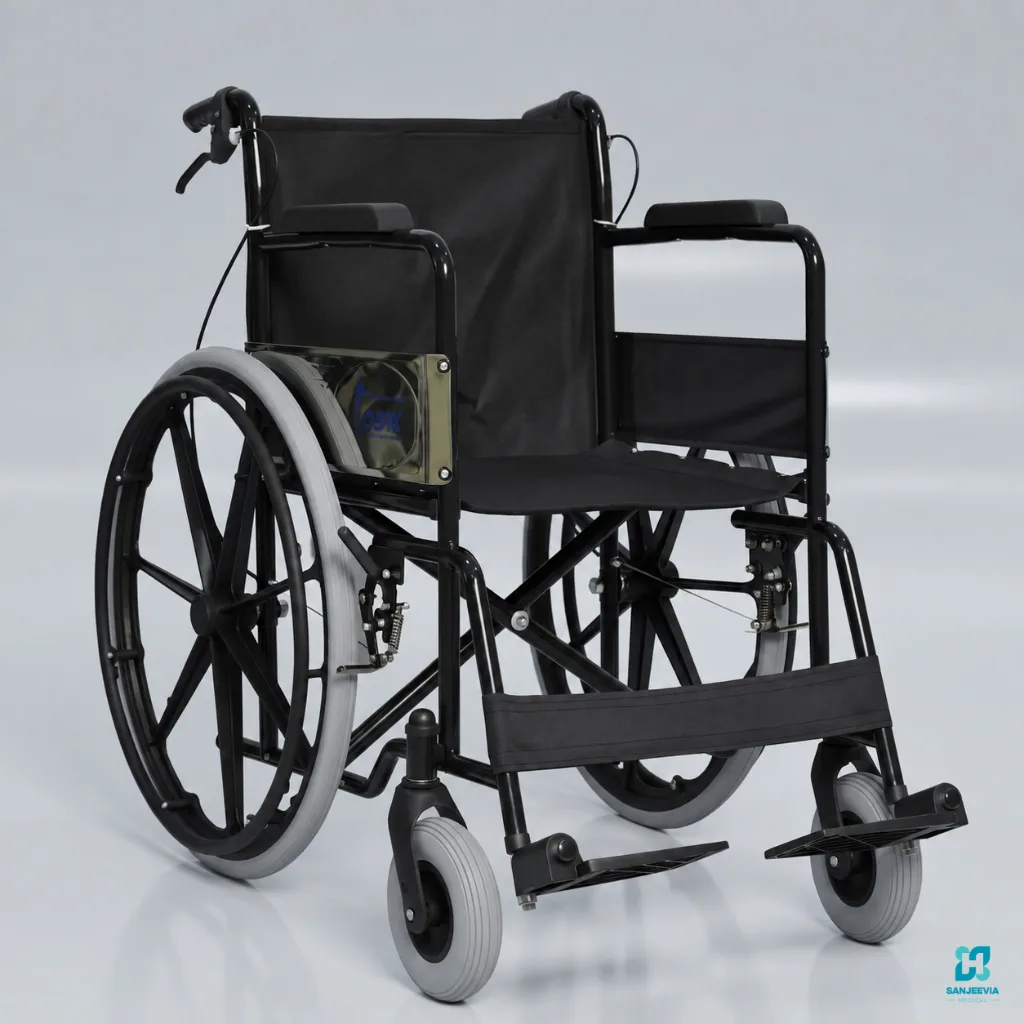
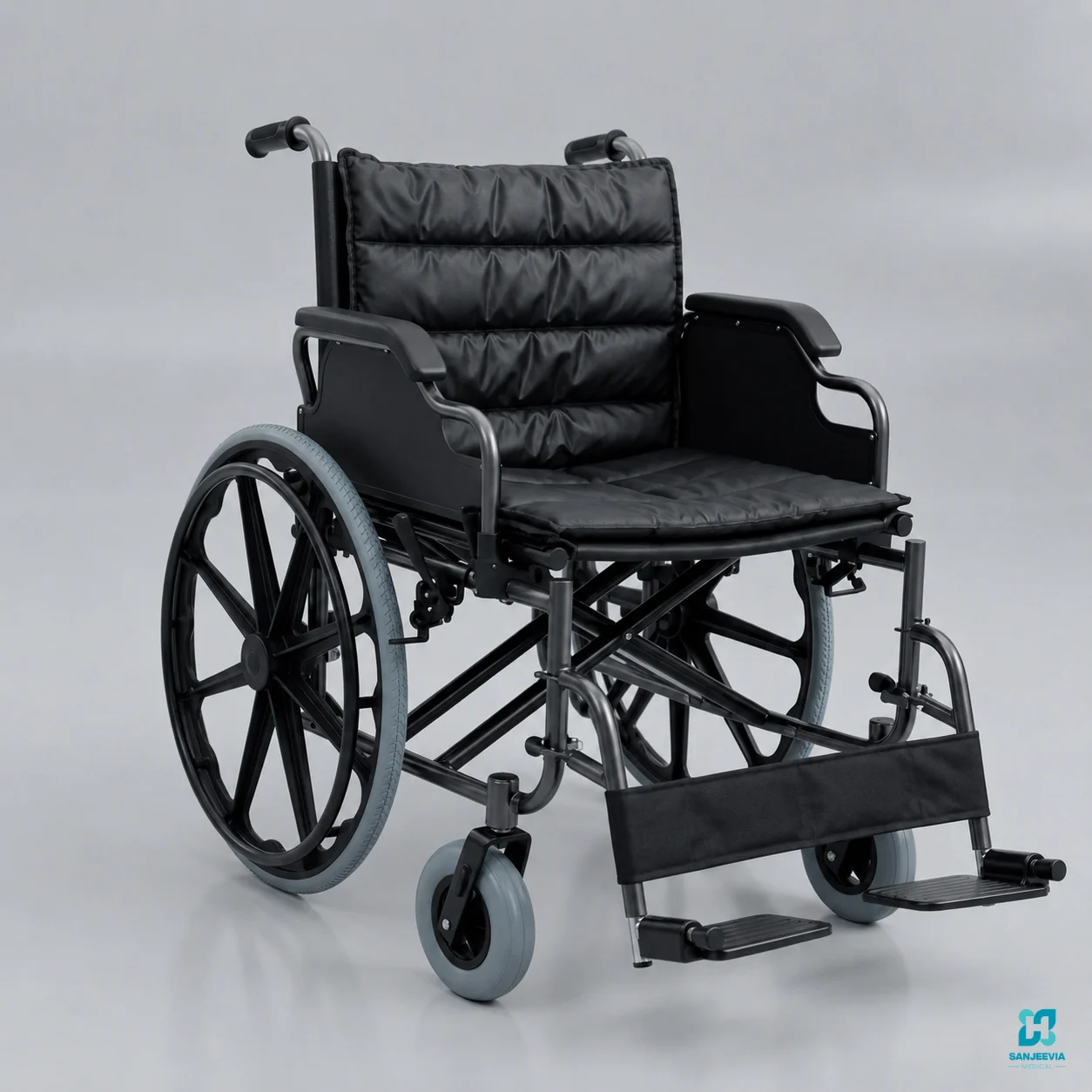
Start with measurements, not a product label
Two products with the same advertised capacity may differ in seat depth, usable width, adjustment range and access requirements. Equally, a person may be below a device’s maximum weight yet find its dimensions unsuitable. Height, body shape, posture and the planned task all matter.
For wheelchair selection, ask an appropriate rehabilitation professional to assess seating and transfers. For bed and bedside care, include the treating team and whoever will provide daily assistance. The HSE’s guidance on individual moving-and-handling assessment considers the person, task, environment, equipment and assistance needed. Its workplace rules apply in the UK; the assessment principles are useful background for family planning.
| Comparison | What the label cannot establish | What to request |
|---|---|---|
| Capacity | Whether a stated limit means user weight or total working load | Manufacturer’s limits for the actual configuration |
| Body fit | Whether a larger seat supports the person correctly | Usable width, depth, length and adjustment details |
| Pressure care | Whether the mattress or cushion matches the assessed need | Individual seating and skin-care assessment |
| Transfers | Whether one helper can safely assist | Documented method, equipment and staffing |
| Access | Whether the equipment can reach its final position | Operating dimensions and a measured route |
| Accessories | Whether ordinary add-ons are compatible | Model-specific approval and limits |
| Daily operation | Whether the caregiver can reach and use controls | A demonstration with the actual users |
| Continuity | Whether a suitable replacement is readily available | A confirmed support and contingency plan |
Eight differences beyond weight capacity
1. Maximum user weight and safe working load may be different
Read the terminology in the manufacturer’s documentation. A bed’s safe working load may account for more than the patient’s weight, while a maximum patient-weight limit may be stated separately. Do not subtract an assumed mattress weight or use a general formula to invent a patient limit.
Ask for the exact model’s restrictions in the configuration being supplied, including accessories. Never exceed a component’s rating. Our hospital-bed weight-capacity guide can help you prepare the questions, but the actual manufacturer documentation controls the decision.
2. Usable width and depth affect support
A wheelchair’s overall width is not its seat width. Seat depth, back support, armrest clearance and footrest adjustment also affect fit. Choosing the widest available seat without assessment may leave a person poorly supported or make access harder.
Compare the listed heavy-duty wheelchair and jumbo wheelchair against an assessed requirement. Ask for the confirmed model’s measurements and maximum user weight. “Jumbo” and “heavy duty” do not establish a universal size or capacity across manufacturers.
3. Mattress and cushion suitability are separate checks
A bed frame can be correctly rated while its mattress is unsuitable for the person’s dimensions, posture or pressure-care needs. A wheelchair cushion must work with the seat and the user’s assessed position. Adding layers or an unapproved cushion can change usable depth, height and relationships with armrests or rails.
Ask the clinical team about pressure-care needs and the supplier about approved fit. Do not assume that a particular mattress guarantees prevention of pressure injury or removes the need for an individual care plan. Record the mattress or cushion model separately from the frame.
4. Transfers require an individual plan
The person’s ability to stand, follow instructions, assist with movement and tolerate a position can affect the transfer method. An equipment rating does not establish how many helpers are needed. Family members should not improvise lifting because a transfer looks short.
Ask for assessment and training using the actual proposed setup. Where specialist handling equipment is recommended, its compatibility and the required assistance must also be confirmed. The NHS guidance on moving and handling someone explains why untrained lifting can injure both people.
5. The access route needs operating dimensions
A folding chair may pass through a doorway when empty but be unable to travel through it with the user seated. Measure the narrowest door, corridor turn, lift entrance and final care area. Include the space needed for the planned helper and transfer method.
For a bed, confirm delivery configuration and final operating footprint separately. Do not assume that removing parts is permitted. If floor loading or a lift limit is uncertain, obtain advice from the building manager and a qualified professional rather than guessing from the equipment’s appearance.
6. Accessories have their own limits
Footrests, transfer aids, commodes and supports must be suitable for the person and compatible with the device. A higher-capacity chair does not upgrade an unrelated accessory. Do not attach generic rails or substitute fittings without confirmation.
Make an itemised list of the equipment actually needed. The bariatric wheelchair guide supports the chair discussion; the wider plan should also address toileting and bedside access. Availability of a specialist bed, commode or handling aid must be confirmed rather than inferred from a wheelchair listing.
7. Caregiver reach and operating effort matter
A broader bed can increase the distance a caregiver must reach. A heavier chair may be difficult for a particular caregiver to propel or control on the intended route. Controls, brakes and moving parts should be demonstrated with the actual users.
Discuss a room arrangement and equipment configuration that avoids unnecessary stretching, pushing or bending. An electric function can reduce a particular manual adjustment, but it does not make patient handling a one-person task. If the demonstration reveals difficulty, ask for reassessment before relying on the setup.
8. Replacement and contingency planning need equal attention
A specialist size may require advance confirmation. Ask what happens if the supplied model is unavailable, a component fails or the patient’s needs change. A replacement must meet the assessed requirement; a superficially similar standard item may not.
Keep the agreed specifications, equipment identifiers and support contacts together. Arrange a clinically appropriate contingency for essential care. Do not assume emergency availability, an identical replacement or a guaranteed response time unless explicitly confirmed.
What to send in an equipment enquiry
Share the assessed equipment type, relevant measurements, service location, access restrictions and intended duration. Provide sensitive measurements discreetly and with the person’s agreement. Ask Sanjeevia to confirm the proposed model and specifications before booking.
The listed wheelchair products provide useful starting points, not confirmation that Sanjeevia supplies every specialist item mentioned in this guide. Use Help Me Choose or contact the equipment team to check the actual requirement. Respectful, precise information makes the discussion more useful than labels about someone’s body.
Frequently asked questions
Does “bariatric” mean the same capacity on every product?
No. Check the exact manufacturer’s model, maximum user weight, dimensions and configuration. The label alone is insufficient.
Is a jumbo wheelchair always stronger than a heavy-duty wheelchair?
No. These names are not a reliable ranking. Compare documented capacity, usable seat dimensions, support and access for the specific models.
Can a standard bed be used if the person is below its weight limit?
Weight is only one consideration. The clinician and provider should also confirm fit, positioning, mattress compatibility, transfers and the care environment.
Can we add a larger cushion to make a small chair suitable?
Do not use a cushion to compensate for an unsuitable chair. Seating and accessory compatibility need assessment together.
Does stronger equipment remove the need for additional help?
No. The transfer and daily-care assessment determines the assistance required. Equipment capacity does not establish staffing needs.
Educational equipment-selection guide. Sources and catalogue checked on 22 October 2026. Illustrations do not certify a product’s capacity. Exact models, suitability and availability require confirmation.
Next Read
For the wheelchair-specific comparison, read Heavy-Duty vs Jumbo Wheelchair: Seat Fit and Home Access.
