
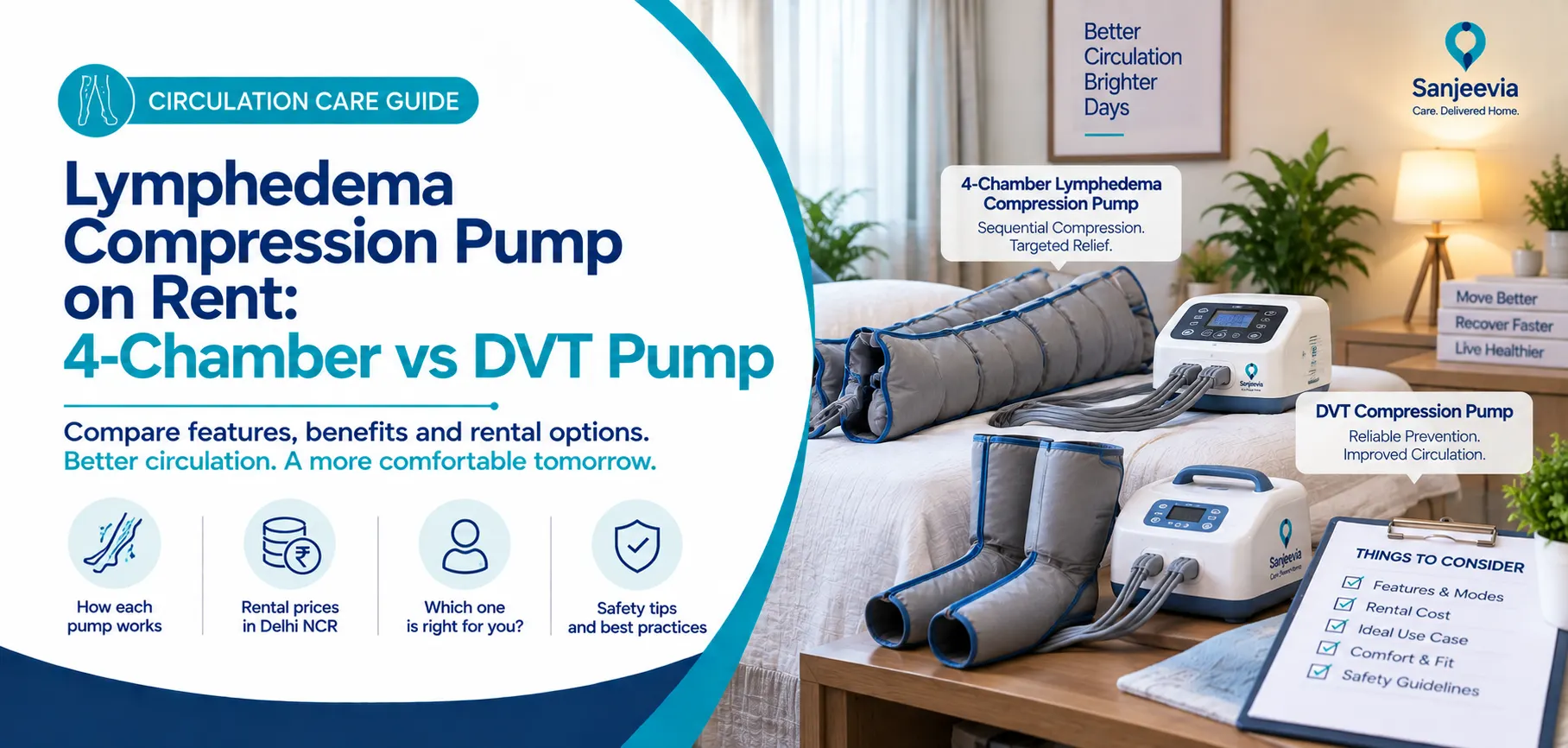
Quick answer: Sanjeevia lists a four-chamber lymphedema compression pump on rent in Delhi NCR at ₹7,100 for one month. The device provides sequential pneumatic compression through leg sleeves with adjustable pressure from 20 to 120 mmHg. It should be used only after a qualified clinician has confirmed the diagnosis, checked for contraindications and prescribed the pressure and session plan.
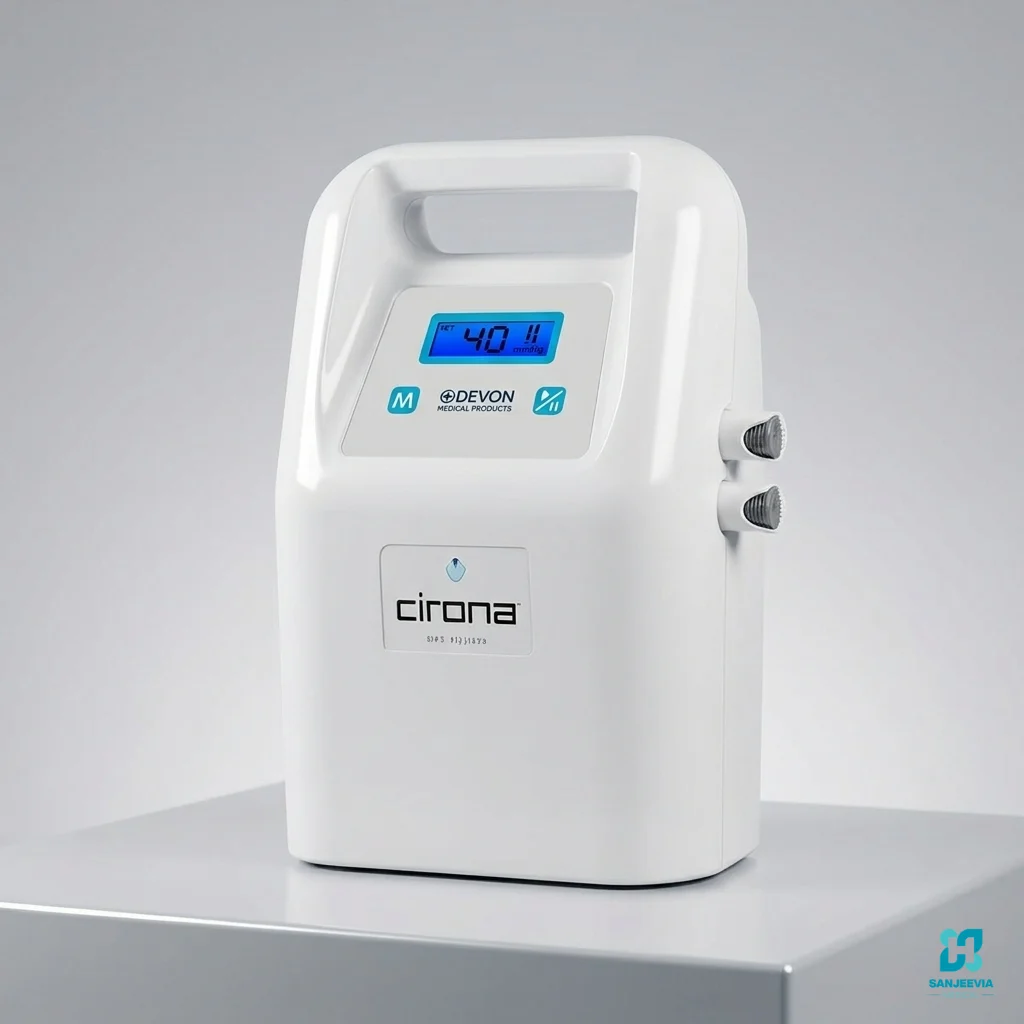
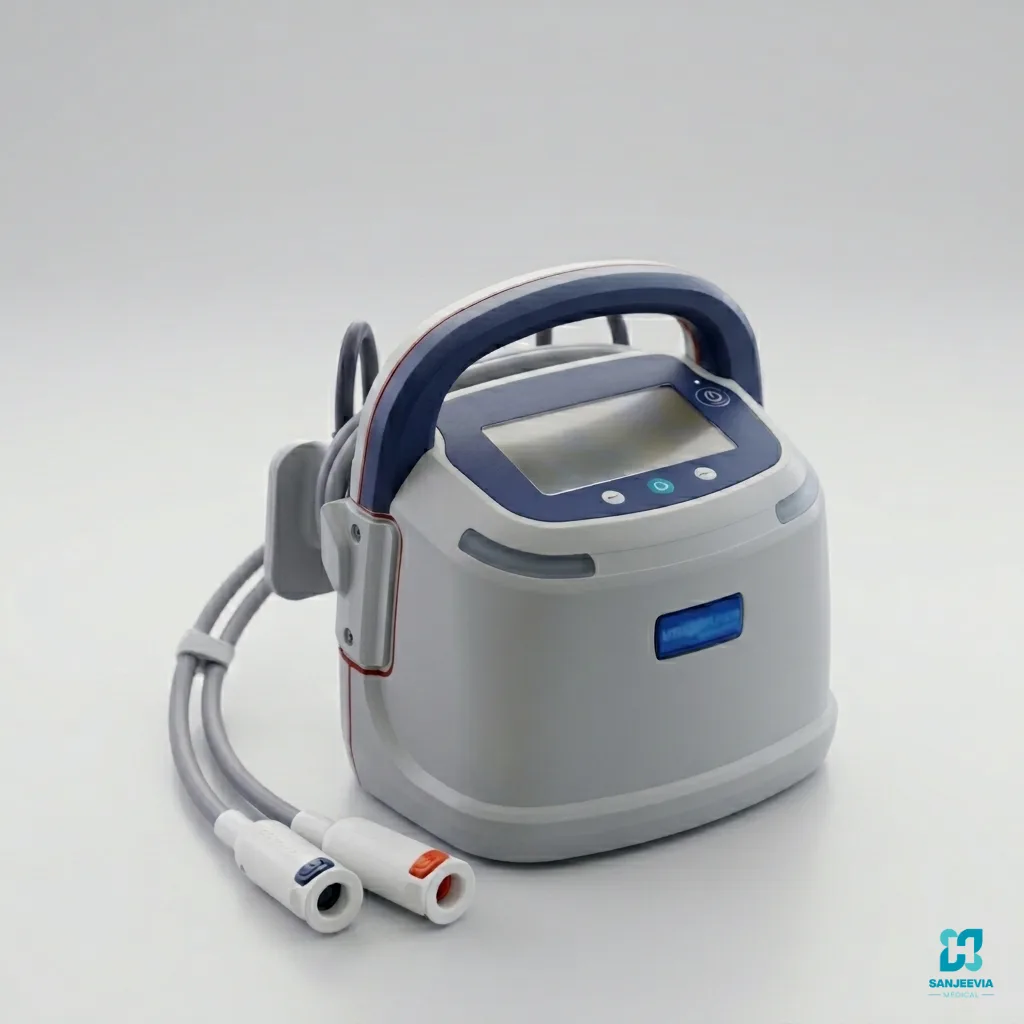
A lymphedema pump and a DVT-prevention pump can look similar because both inflate air chambers around a limb. Their clinical purpose, garment design and prescribed settings may differ. Choosing by appearance or price can result in the wrong equipment.
Lymphedema compression pump rental price
| Plan | Listed amount | Calculated plan total |
|---|---|---|
| One month | ₹7,100 per month | ₹7,100 |
| Two months | ₹6,745 per month | ₹13,490 |
| Three months | ₹6,390 per month | ₹19,170 |
| Six months | ₹5,680 per month | ₹34,080 |
| Purchase | ₹1,49,000 | One-time equipment price |
| Transport | ₹1,000 | Listed delivery and collection charge |
| Refundable security deposit | ₹15,000 | Subject to the rental and return terms |
Prices were checked on 10 September 2026 and may change. Confirm sleeve availability, treatment duration, deposit terms and the final invoice before dispatch.
What the four-chamber device does
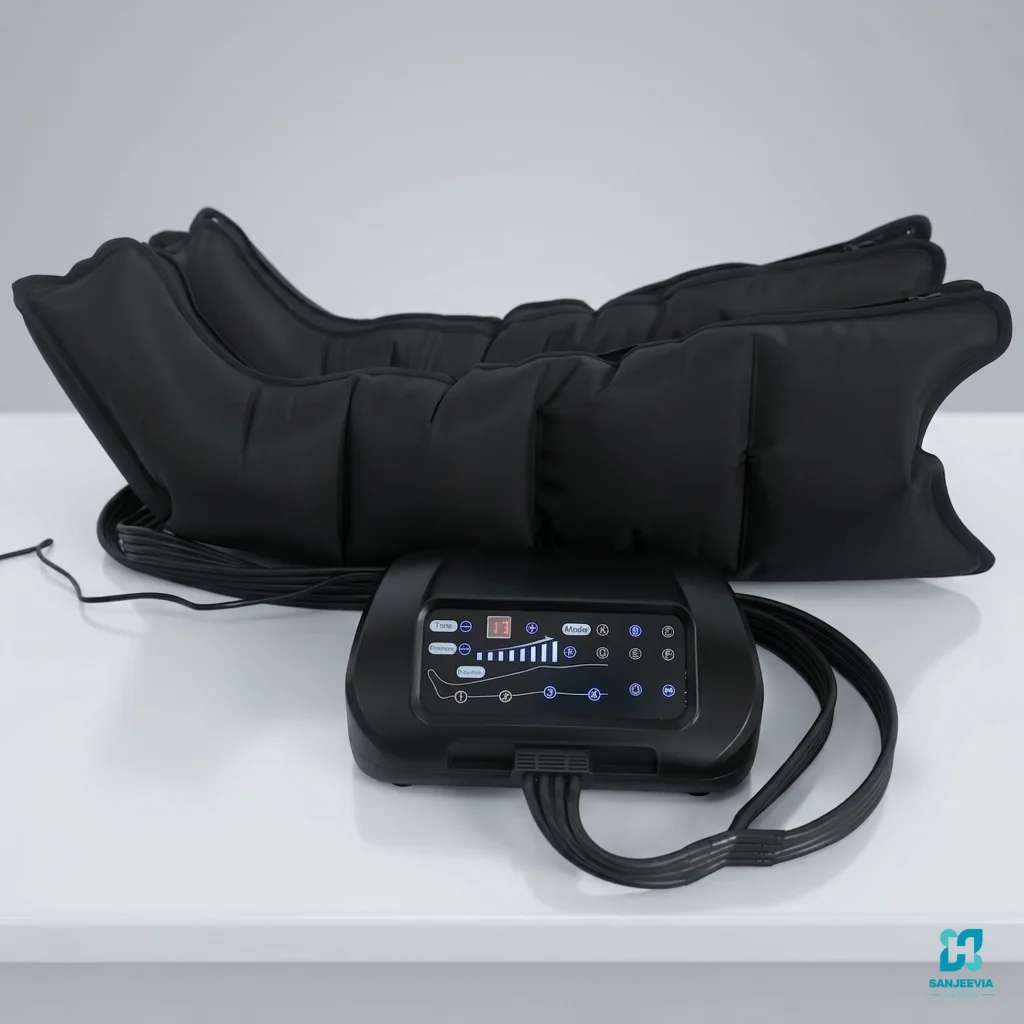
The system inflates four chambers in sequence from the lower part of the limb towards the body. This pattern is intended to provide graded, intermittent compression. The listed unit has adjustable pressure from 20 to 120 mmHg, a timer, a 220V power supply and leg sleeves.
Those specifications describe capability, not the correct setting. Higher pressure is not automatically more effective. The treating clinician should provide the prescribed pressure range, session length, frequency, garment placement and stop conditions for the individual patient.
Lymphedema pump versus DVT pump
| Question | Lymphedema compression equipment | DVT-prevention equipment |
|---|---|---|
| Primary purpose | May be prescribed as one part of a lymphedema-management plan | May be prescribed to reduce venous stasis in selected patients |
| Typical clinical context | Chronic swelling assessed by a lymphedema specialist, vascular clinician or physiotherapist | Perioperative or immobility-related prevention under medical supervision |
| Garment and cycle | Selected for the affected limb and treatment goal | Selected for the prevention protocol and patient condition |
| Can one replace the other? | No substitution should be made without the prescriber’s approval. | |
A pump is not a tool to treat a suspected blood clot. If a clinician suspects active deep vein thrombosis, do not start compression from an online recommendation. Seek urgent medical assessment.
What to ask the prescriber before renting
- Has the cause of swelling been assessed?
- Is intermittent pneumatic compression suitable for this patient?
- Which limb or limbs should be treated?
- What pressure, cycle and session duration should be used?
- How often should sessions take place?
- Should the device be used with compression garments, exercise or manual lymphatic drainage?
- Are there skin, vascular, cardiac or infection-related reasons to avoid treatment?
- What symptoms mean the session must stop?
- When will progress and garment fit be reviewed?
Conditions that need clinical clearance
The patient’s full history matters. Ask the treating clinician before use when there is suspected or confirmed DVT, sudden unexplained swelling, active skin infection, open wounds, severe arterial disease, uncontrolled heart failure, severe pain, altered sensation or another condition that may make compression unsafe. This list is not complete and cannot be used to self-clear a patient.
Redness, unusual warmth, new one-sided swelling, chest pain, sudden breathlessness or fainting require prompt medical attention. Do not use the machine while waiting to see whether these symptoms settle.
Sleeve fit and skin inspection
The sleeve should match the limb and lie smoothly without folds, twisted tubing or pressure over vulnerable skin. Before each prescribed session:
- Inspect the skin in good light for redness, broken areas, rash, leakage or new pain.
- Check that the limb and sleeve are dry.
- Position the sleeve according to the device handover and clinician’s instructions.
- Keep tubing open, unkinked and away from the user’s feet.
- Confirm the prescribed pressure and timer before starting.
- Stay available to stop the session if the patient reports pain, numbness, dizziness or breathing difficulty.
- Inspect the skin again after removing the sleeve and record any unexpected change.
Do not place extra towels, heating pads or unapproved material inside the sleeve. Do not use a damaged sleeve or hose.
Equipment checks at delivery
| Check | What to confirm |
|---|---|
| Pump identity | Model, serial number and four-chamber configuration match the handover |
| Pressure control | Display or dial changes correctly and returns to the prescribed setting |
| Timer | Session time can be set and stopped |
| Sleeves | Correct side and size, clean lining, intact fasteners and no air leaks |
| Tubing | All connectors fit securely and tubes are not cracked or kinked |
| Power | Cable and plug are intact; the device starts without unusual noise or smell |
| Support plan | Contact method for a fault and the replacement process are clear |
How to compare rental with purchase
Start with the clinician’s expected duration. A one-month rental can support a defined trial or short treatment period. A longer plan reduces the listed monthly charge, but the total commitment is higher. Purchase may be considered for ongoing use after the patient, device, sleeve and treatment plan have proved suitable.
Include the ₹15,000 security deposit in cash-flow planning even though it is refundable subject to return conditions. Review the security deposit policy, rental policy and equipment breakdown and replacement policy before booking.
Questions for ongoing review
A lymphedema plan may include skin care, exercise, compression garments and specialist therapy. The pump should sit within that plan. At review, ask whether limb measurements, symptoms, skin condition and functional comfort are changing as expected. Do not increase pressure or extend sessions simply because swelling persists.
Keep a short log of the date, prescribed setting, session duration, symptoms before and after use, and any skin change. Share it with the treating clinician. A device log supports a clinical conversation but does not replace an examination.
How to request the right machine
Open the four-chamber lymphedema pump product page and have the prescription, affected limb, sleeve measurements, expected rental duration and delivery address ready. If the prescriber requested a DVT-prevention device, state that clearly so the product is not substituted.
For a written availability and cost confirmation, contact Sanjeevia. You can also use the equipment matching form when the prescribed device category is clear but the appropriate listed model is uncertain.
Frequently asked questions
Can I rent a lymphedema pump without a prescription?
The equipment should be used only with clinical clearance and a prescribed treatment plan. Swelling has many possible causes, and compression can be unsuitable in some conditions.
Is a four-chamber pump better than a single-chamber device?
More chambers describe how compression is delivered, but suitability depends on the diagnosis, garment, prescribed sequence and patient response. Ask the treating specialist to specify the required system.
Can a lymphedema pump be used for an active DVT?
Do not use it for a suspected or active DVT unless the treating specialist has explicitly directed care. New one-sided swelling, warmth, pain, chest pain or sudden breathlessness needs urgent medical assessment.
Are leg sleeves included?
The current product information lists leg sleeves with the unit. Confirm the correct sleeve configuration and size before dispatch.
Does the pump cure lymphedema?
Lymphedema is usually managed as a long-term condition. A compression pump may be one part of a wider clinician-led plan; it is not a standalone cure.
Professional reference
This article provides equipment and rental information. It does not diagnose swelling or prescribe compression therapy.