
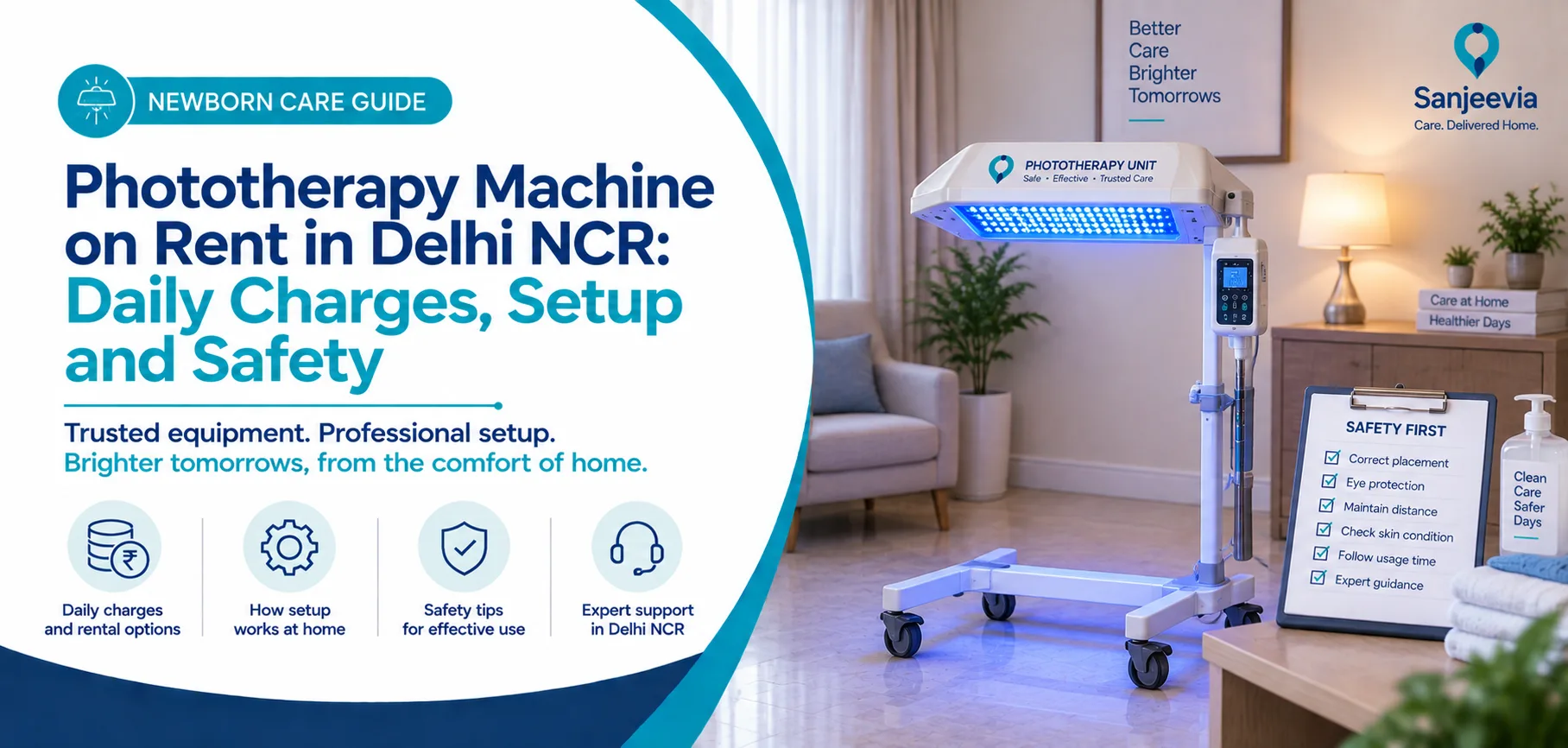
Quick answer: Sanjeevia lists its Indian-brand LED phototherapy machine on rent in Delhi NCR at ₹3,500 per day, plus ₹1,000 transport. The equipment should be arranged only after a paediatrician has confirmed that home phototherapy is suitable, provided a written treatment plan and set a bilirubin-testing schedule.
When a newborn has jaundice, families often have to make decisions quickly. Price matters, but the safest choice depends on the baby’s age, gestational age, bilirubin level, risk factors, feeding and ability to complete repeat blood tests. A machine booking cannot replace that clinical assessment.
Phototherapy machine rental charges in Delhi NCR
| Cost item | Listed amount | What it covers |
|---|---|---|
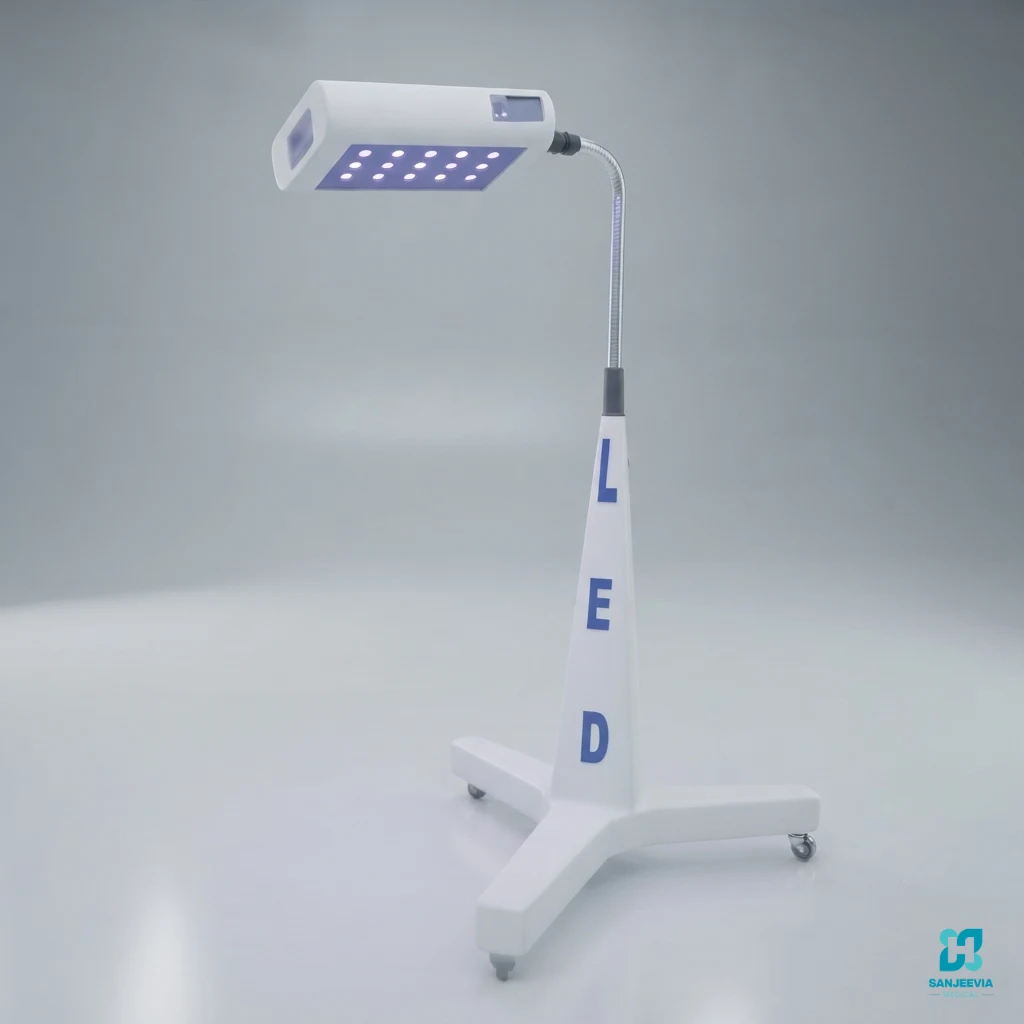
| Equipment rental | ₹3,500 per day | Indian-brand narrow-spectrum blue LED phototherapy unit |
| Transport | ₹1,000 | Delivery and collection charge shown on the product page |
| Paediatric consultation | Not included | Diagnosis, prescription and treatment decisions |
| Bilirubin tests | Not included | Tests at the intervals ordered by the treating clinician |
| Nursing or emergency care | Not included | Clinical observation, treatment changes and hospital care |
Prices were checked on 10 September 2026 and may change. On the current listed rates, one day of equipment use plus transport is ₹4,500, two days are ₹8,000, and three days are ₹11,500. These examples exclude tests, medical consultations and any nursing support. Confirm the final duration and payable amount before dispatch.
What a home phototherapy plan must answer
A paediatrician should decide whether the baby can be treated at home. Ask for written answers to these points:
- What is the baby’s latest total serum bilirubin value, and what threshold applies?
- How many hours of phototherapy are required each day?
- At what distance should this exact machine be placed?
- When and where will the next bilirubin test be completed?
- What temperature, feeding and wet-nappy observations should the family record?
- Which symptoms or bilirubin result require immediate hospital assessment?
- Who should the family call outside regular clinic hours?
The American Academy of Pediatrics describes home LED phototherapy as an option only for carefully selected babies and stresses reliable equipment, prompt delivery, daily bilirubin measurement and the family’s ability to use the device correctly. The treating paediatrician must apply guidance to the individual baby.
Blue LED phototherapy is not ultraviolet treatment
The rental unit uses narrow-spectrum blue LED light designed for neonatal phototherapy. It is not a tanning lamp and does not use ultraviolet light as treatment. Clinical effectiveness depends on more than switching on the device. The light wavelength, measured irradiance, distance from the baby, exposed skin area and total treatment time all affect the delivered dose.
Ask whether irradiance has been checked for the exact unit at the prescribed distance with a calibrated meter. A visual check that the lamps look bright cannot confirm the treatment dose. Do not move the lamp closer, change the angle or cover part of the light footprint unless the clinician or trained installer has instructed you to do so.
Home setup checklist before the first session
- Prepare a stable area. Keep the unit on a level surface with the cable away from walking paths, liquids and loose fabric.
- Confirm the prescribed distance. Measure from the light source to the baby as instructed. Do not estimate by eye.
- Use the eye protection supplied or prescribed. Check its position regularly and follow the clinician’s instructions for removal during feeding or care.
- Expose only the area advised. Clothing, blankets and nappies can reduce the skin receiving light. Keep the baby warm without blocking the light field.
- Record start and stop times. A written log makes it easier to calculate interruptions and report actual treatment time.
- Continue the feeding plan. Feeding and hydration monitoring are part of jaundice care. Follow the paediatrician’s instructions and record wet nappies.
- Monitor temperature. Use the method and interval specified by the clinician.
- Keep the testing appointment. Appearance or skin colour cannot replace a bilirubin measurement.
Questions to ask at delivery
| Question | Why it matters |
|---|---|
| Is this the same model and serial-numbered unit checked before dispatch? | Settings and condition must match the handover record. |
| What distance and light footprint were verified? | The prescribed setup determines how much light reaches exposed skin. |
| How do we use the timer or maintain a manual session log? | Interrupted treatment time should be visible to the clinician. |
| What should we do if the light fails? | Newborn treatment cannot wait for an unclear support route. |
| Which accessories are supplied? | Confirm eye protection and any model-specific items before use. |
| How will collection or an extra day be handled? | This avoids a gap if the clinician extends treatment. |
When home phototherapy may not be appropriate
Do not decide this from an online checklist. A baby who is unwell, feeding poorly, difficult to wake, showing an unusual cry, arching, fever, temperature instability or fewer wet nappies needs prompt clinical advice. Home treatment is also unsuitable when bilirubin cannot be tested at the required interval, reliable supervision is unavailable, the equipment cannot be delivered promptly, or the doctor advises hospital treatment because of the baby’s risk profile.
If the baby’s condition changes or the light unit stops working, contact the paediatrician and Sanjeevia immediately. Follow the clinician’s emergency plan rather than waiting for the next planned test.
Phototherapy at home versus hospital treatment
| Decision factor | Home equipment | Hospital treatment |
|---|---|---|
| Clinical eligibility | Only for a baby selected by the treating paediatrician | Suitable when closer monitoring or escalation may be needed |
| Bilirubin monitoring | Family must reliably attend tests and communicate results | Testing and observation are coordinated in the facility |
| Equipment oversight | Family follows the written setup and support plan | Clinical staff operate and monitor treatment |
| Response to deterioration | Requires a clear, rapid transfer plan | Clinical assessment is immediately available |
Home use can reduce disruption for suitable families, but convenience should never override the treatment threshold, monitoring schedule or escalation plan.
How to book the correct equipment
Keep the paediatrician’s plan, latest bilirubin report, delivery address and expected start time ready. Review the phototherapy machine product page, then read Sanjeevia’s delivery policy and equipment breakdown and replacement policy. The related guide, Home Phototherapy for Newborn Jaundice: Equipment Questions Parents Should Ask, provides more questions for the paediatrician and supplier.
For availability and a written cost confirmation, contact Sanjeevia. Share the prescribed start time so the team can confirm whether the unit can reach the home without delaying care.
Frequently asked questions
Can parents start phototherapy because a baby looks yellow?
No. Visible jaundice needs clinical assessment and bilirubin measurement. A clinician decides whether phototherapy is needed and whether home treatment is suitable.
Does the rental price include bilirubin tests?
No. The listed ₹3,500 daily rate is for the equipment. Transport is listed separately at ₹1,000. Tests, consultations, nursing and emergency care are not included.
How many days will the machine be needed?
The treating clinician decides based on repeat bilirubin values and the baby’s condition. Do not stop because the skin appears less yellow.
Can sunlight be used instead?
No. NICE guidance states that sunlight should not be used as treatment for neonatal hyperbilirubinaemia. Use only the prescribed medical phototherapy device and monitoring plan.
What should happen before collection?
Collection should follow the clinician’s instruction to stop treatment and complete any required rebound bilirubin check. Confirm the collection timing with Sanjeevia so the equipment remains available for the prescribed period.
Clinical references
- American Academy of Pediatrics: Management of Hyperbilirubinemia in the Newborn Infant
- NICE: Jaundice in newborn babies under 28 days
This article explains equipment and rental logistics. It does not diagnose jaundice, prescribe phototherapy or replace care from a paediatrician.