
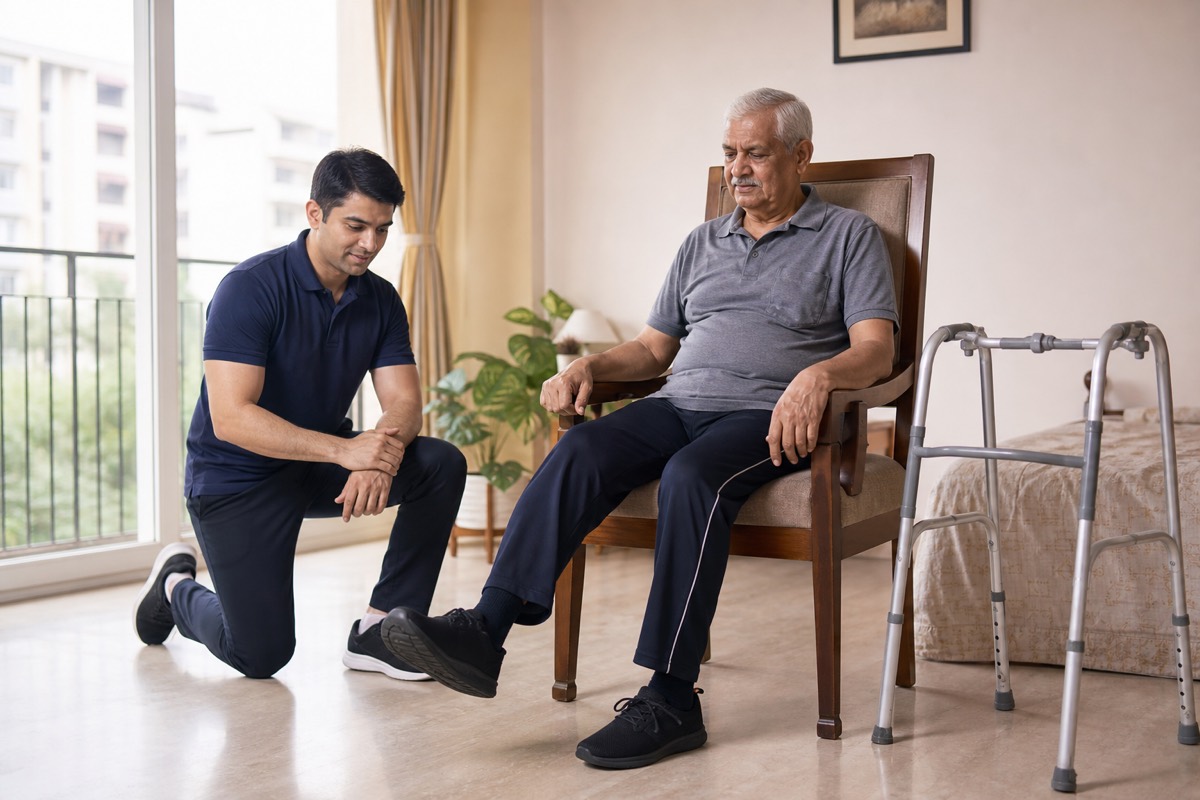
Quick answer: Home physical therapy after knee or hip surgery should follow the written plan from the surgeon and physiotherapist. Common early exercises may include ankle movements, thigh or buttock contractions, supported knee bending and carefully supervised walking, but the correct movement, precautions, repetitions and progression depend on the operation and the patient. Families should support the prescribed routine—not copy a generic programme or push through sharp pain.
Before starting home rehabilitation
Discharge instructions can differ even when two people have had the same named operation. The surgical approach, weight-bearing status, wound, other health conditions and progress in hospital all affect the plan. Before the patient comes home, ask the physiotherapist to demonstrate every exercise and transfer. Record the exercise name, starting position, repetitions, frequency, precautions and the symptoms that should trigger a call.
Confirm these points in writing:
- How much weight may be placed through the operated leg?
- Which hip or knee movements are restricted, and for how long?
- Which walking aid is prescribed and how should it be adjusted?
- Does the patient need supervision for standing, walking or stairs?
- How should pain medicine be timed in relation to the session, if advised?
- Who should the family contact if pain, swelling or mobility suddenly worsens?
Prepare the exercise area before each session. Use a firm bed or sturdy high-backed chair when specified, keep the floor dry, remove loose rugs and cables, and provide adequate light. The new fall-prevention guide offers a room-by-room check.
Common exercises your therapist may prescribe
The examples below explain movements that often appear in orthopaedic rehabilitation guides. They are not a personal prescription. Perform only the exercises approved for the patient, using the exact technique and dose provided by the treating team.
Ankle pumps
With the leg supported as instructed, the patient gently moves the foot up and down at the ankle. This is commonly used early after hip or knee replacement. The movement should be slow and controlled, without forcing the range.
Quadriceps sets
The patient tightens the muscle at the front of the thigh while trying to straighten the knee in the approved position. A therapist may use this exercise to help the patient reconnect with the thigh muscles after surgery. Avoid placing weight or force on the knee unless specifically instructed.
Heel slides or supported knee bends
The heel moves gradually toward the body so the knee bends, then returns to the starting position. The permitted range varies. Do not pull the leg with a strap or another person’s force unless the physiotherapist has taught that method.
Gluteal contractions
The patient gently tightens the buttock muscles while lying or sitting in the prescribed position. The body should not twist and the patient should continue breathing normally.
Hip abduction or leg slides
Some hip-replacement plans include sliding the operated leg outward and back while the toes and knee remain aligned. This exercise is not suitable for every surgical approach or stage. Obtain clear permission and technique instructions from the surgeon or physiotherapist before attempting it.
Straight-leg raises
A therapist may prescribe a straight-leg raise for selected patients who can maintain the knee in the correct position. It should not be started merely because it appears in a general guide. Stop if the knee cannot remain controlled or the movement causes concerning pain, and ask the therapist to reassess.
The American Academy of Orthopaedic Surgeons provides separate exercise guidance for total knee replacement and total hip replacement. Both resources emphasise supervision by the orthopaedic surgeon and physical therapist.
How to organise a safer exercise session
- Check the plan. Use the latest written instructions, especially after a follow-up appointment.
- Prepare the space. Keep the walking route clear and position prescribed equipment before the patient stands.
- Check how the patient feels. Report new dizziness, unusual breathlessness, chest discomfort, confusion or a sudden change in pain before continuing.
- Use the taught starting position. A bed that is too soft or a chair that is too low can change the movement.
- Move slowly. Quality and control matter more than rushing through a list.
- Follow the prescribed dose. Do not add repetitions, resistance bands or ankle weights without approval.
- Record the session. Note exercises completed, symptoms and questions for the next therapy visit.
Mild effort or stretching may be expected with some prescribed exercises, but “no pain, no gain” is not a safe rule after surgery. Sharp or escalating pain, a new mechanical problem, or a marked loss of function needs review.
Walking and mobility aids
Walking is part of many recovery plans, but it does not automatically replace prescribed exercises. Use the walker, crutches or other aid selected by the physiotherapist. Do not change to a cane—or stop using support—because the patient feels better for one day.
- Wear closed-back, secure footwear with a non-slip sole.
- Confirm the walking aid height and hand position.
- Keep the aid close before standing; never reach across the room for it.
- Follow the prescribed sequence for the aid, operated leg and unaffected leg.
- Use supervision on stairs until the therapist confirms independence.
- Avoid carrying objects in both hands while using a walker.
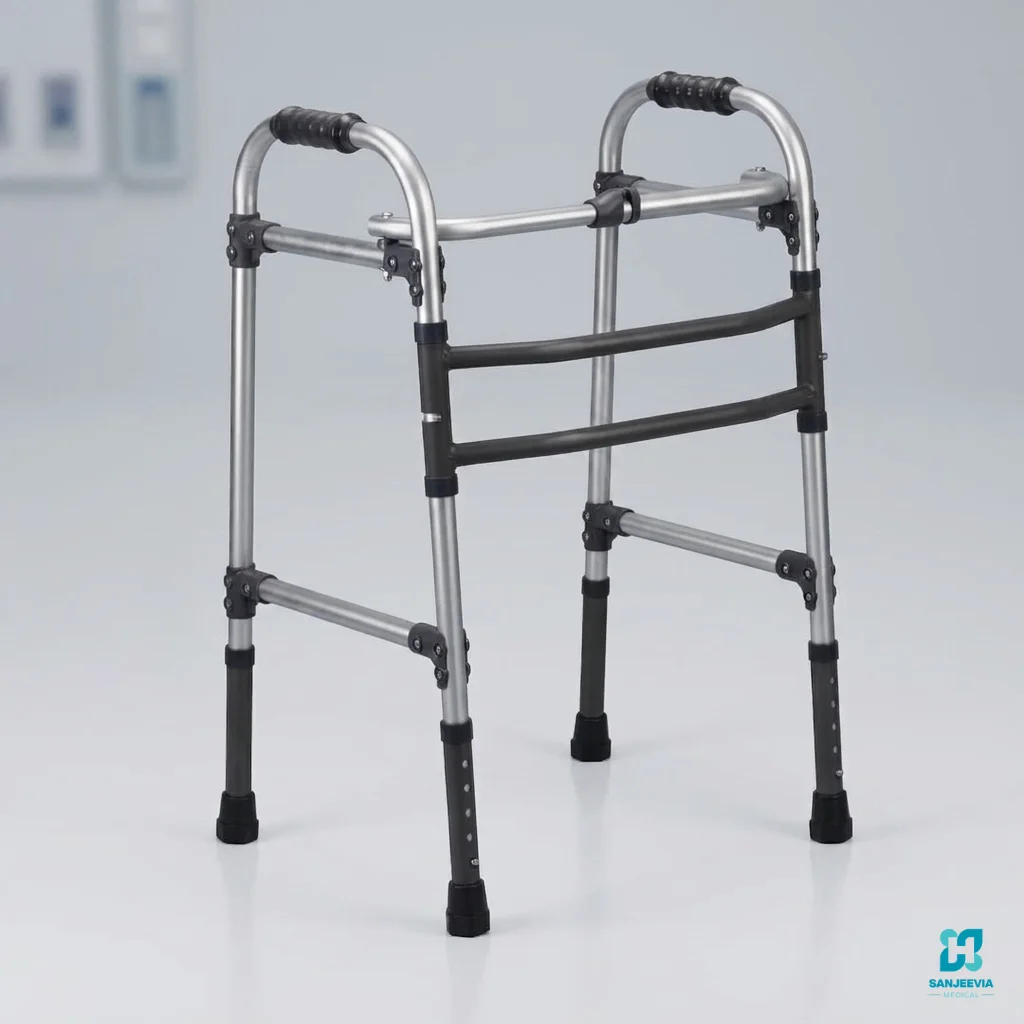
See Sanjeevia’s guide to professional walker fitting. Families preparing for discharge may also use the knee-replacement home equipment checklist or the guide to home setup after hip replacement.
When to stop and seek medical advice
Stop the session and follow the patient’s emergency or escalation plan if there is chest pain, severe breathing difficulty, fainting, sudden confusion or another urgent symptom. Contact the surgeon or clinical team promptly for a sudden increase in wound drainage, fever with wound concerns, new or worsening calf pain or swelling, a major increase in operated-leg swelling, uncontrolled pain, or a sudden loss of movement or weight-bearing ability. Use local emergency services when symptoms are severe or the care team has instructed you to do so.
Do not massage a painful or swollen calf, force a joint, alter prescribed blood-thinning medicine, or attempt to “walk off” a concerning symptom.
The caregiver’s role
A caregiver can make the routine easier by preparing the space, reading the plan, placing equipment, timing sessions as instructed and recording questions. The caregiver should not invent new exercises, force a limb, pull the patient up by the arms or change weight-bearing restrictions.
If hands-on assistance is required, ask the physiotherapist to teach the exact technique using the patient’s real equipment. One safe demonstration is more useful than guessing from a video.
Frequently asked questions
How many repetitions should the patient do?
Use the number and frequency prescribed for that patient. The correct dose varies by operation, recovery stage and clinical findings. Do not copy another patient’s schedule.
Can the patient exercise through pain?
Some discomfort may occur during recovery, but sharp, severe or worsening pain is not a signal to push harder. Stop, return to a safe position and follow the physiotherapist’s instructions about symptoms.
Is walking enough after knee or hip replacement?
Walking and prescribed exercises serve different purposes. AAOS guidance notes that walking is not a substitute for the exercises prescribed after knee replacement. Follow the complete plan provided by the treating team.
When can a walker be replaced with a cane?
Only when the physiotherapist or surgeon confirms that balance, strength, gait and weight-bearing status make the change appropriate.
Can online exercise videos replace a physiotherapist?
No. A video cannot account for the surgical approach, precautions, wound, medicines, other conditions or the patient’s movement quality. Use general resources to understand terminology, not to create a treatment plan.
Sources and further reading
- AAOS: Total Knee Replacement Exercise Guide
- AAOS: Total Hip Replacement Exercise Guide
- AAOS: Activities After Total Knee Replacement
Important medical boundary: This article provides general information about rehabilitation, home setup and equipment safety. It does not replace medical advice, diagnosis, treatment or an individual physiotherapy programme. Always follow the instructions provided by the orthopaedic surgeon, physiotherapist and equipment manufacturer.
Prepare the home for recovery
Sanjeevia can help families in Delhi NCR arrange prescribed hospital beds, walkers, commode chairs and other home-care equipment before discharge. Contact Sanjeevia for equipment matching, delivery and handover support. Exercise selection and progression remain with the treating clinical team.
Equipment that may support the prescribed recovery plan
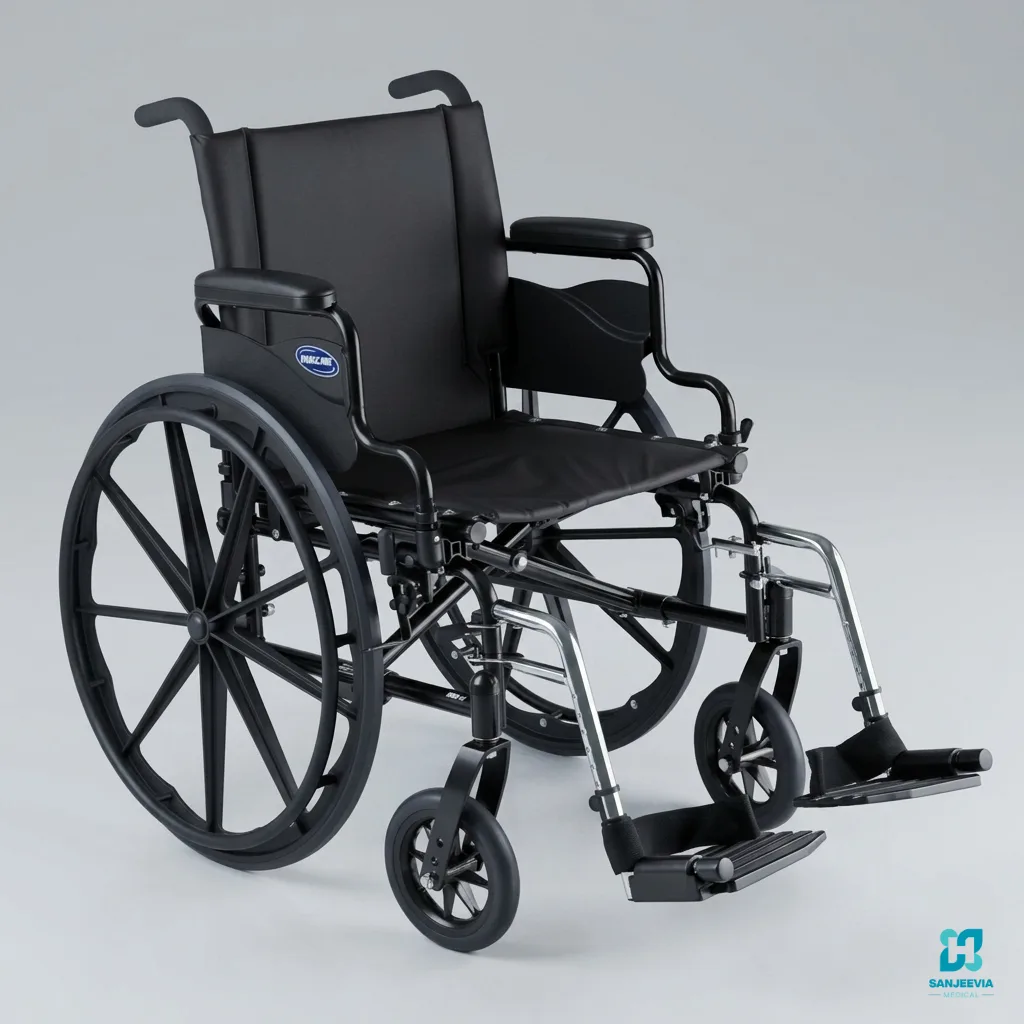
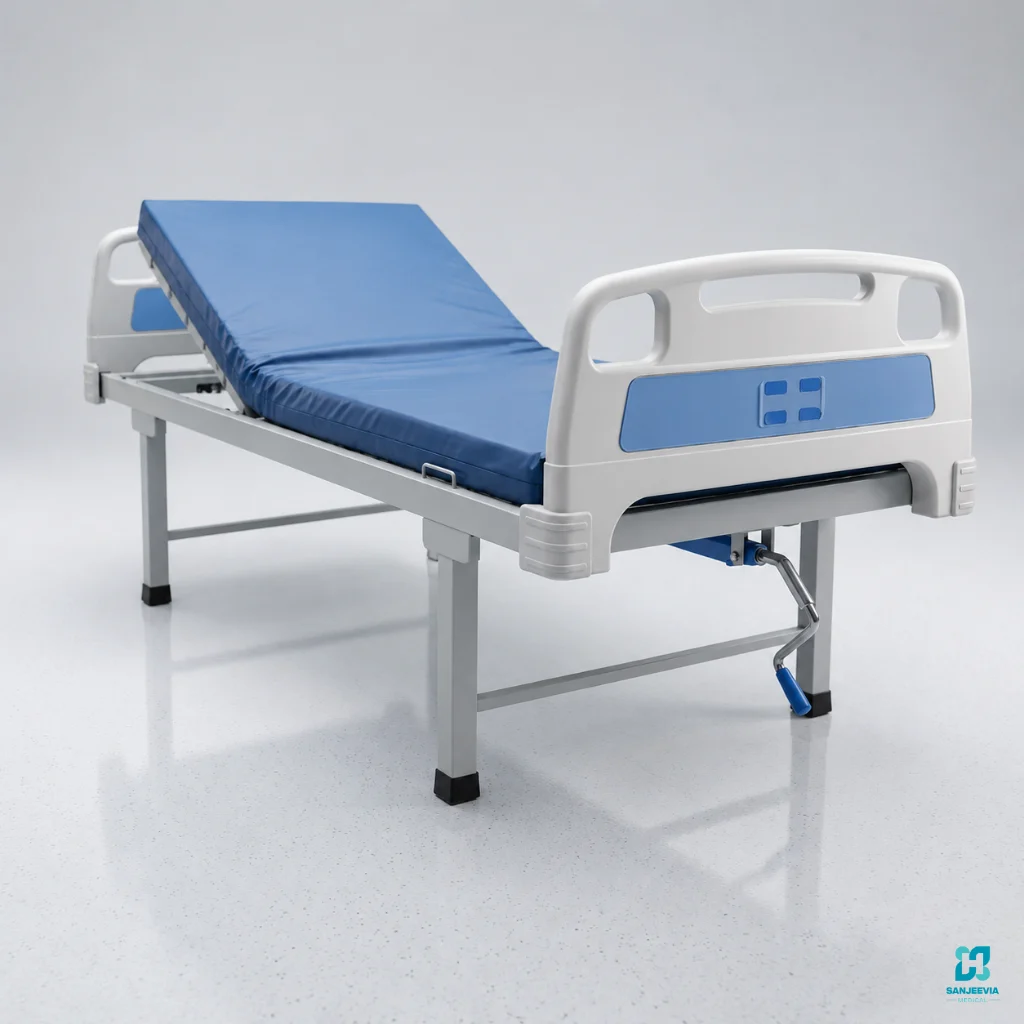
Use only equipment recommended and fitted for the patient by the treating team. Families preparing for knee or hip recovery can compare Sanjeevia’s Walker / Zimmer Frame, standard manual wheelchair and hospital beds for home care. If the required equipment is unclear, use the equipment matcher or contact Sanjeevia with the discharge instructions before booking.
Published by Sanjeevia Medical.