
At a Glance
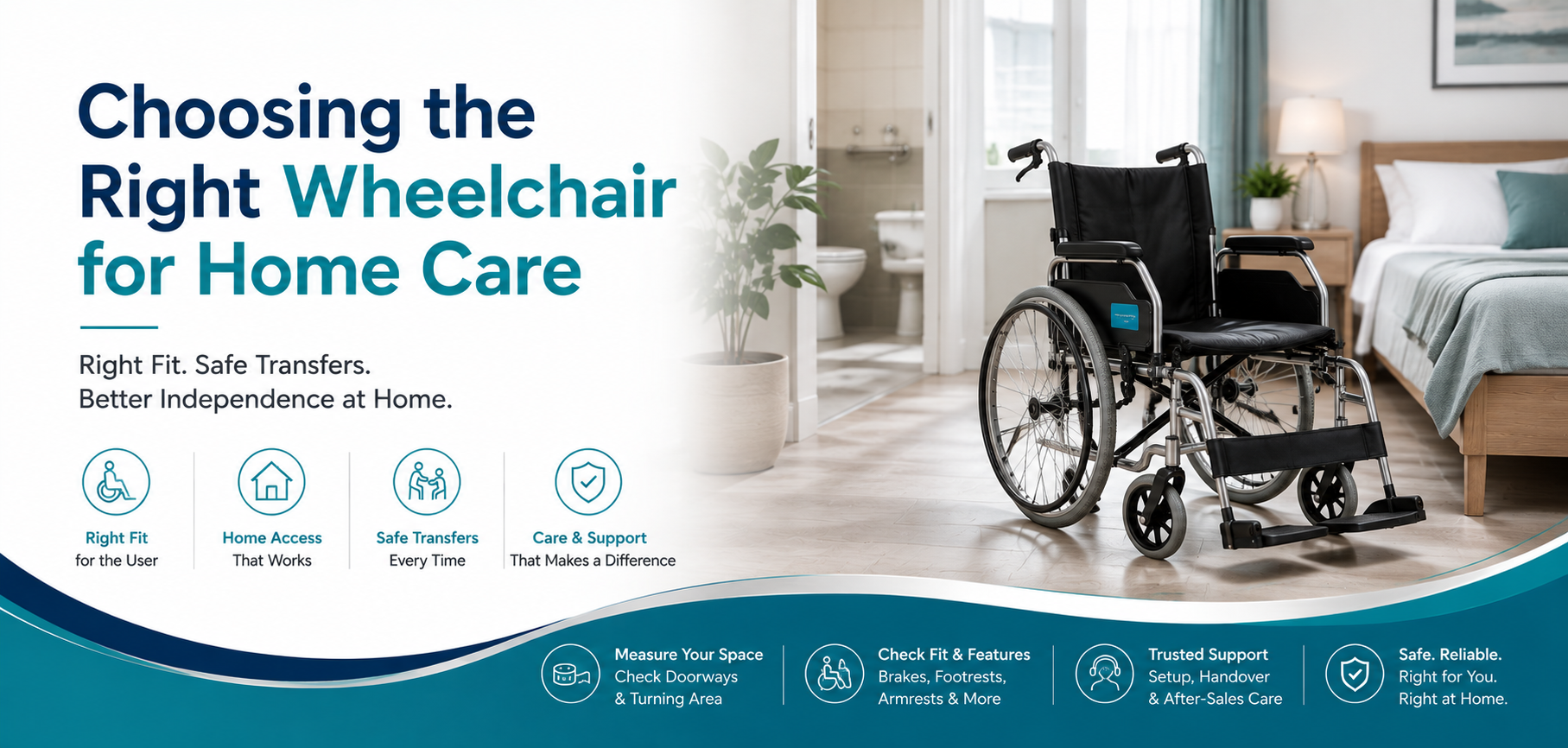
- A wheelchair should fit the user’s mobility, transfer and toileting needs, as well as the home’s doorways, turning space and caregiver support.
- Compare the exact equipment, setup and service scope before you rent or buy.
- Follow the treating clinician’s instructions for patient care, settings and transfers.
Reading time: 6 min | Category: Home Care Equipment | Published by Sanjeevia Medical
Quick Answer
A wheelchair should fit the user’s mobility, transfer and toileting needs, as well as the home’s doorways, turning space and caregiver support.
A wheelchair is often arranged on the same day as discharge, but the type makes a real difference. A chair that cannot enter the bathroom, does not support safe transfers or does not suit the user’s ability to propel it can create unnecessary strain for everyone.
Start with the Right Decision
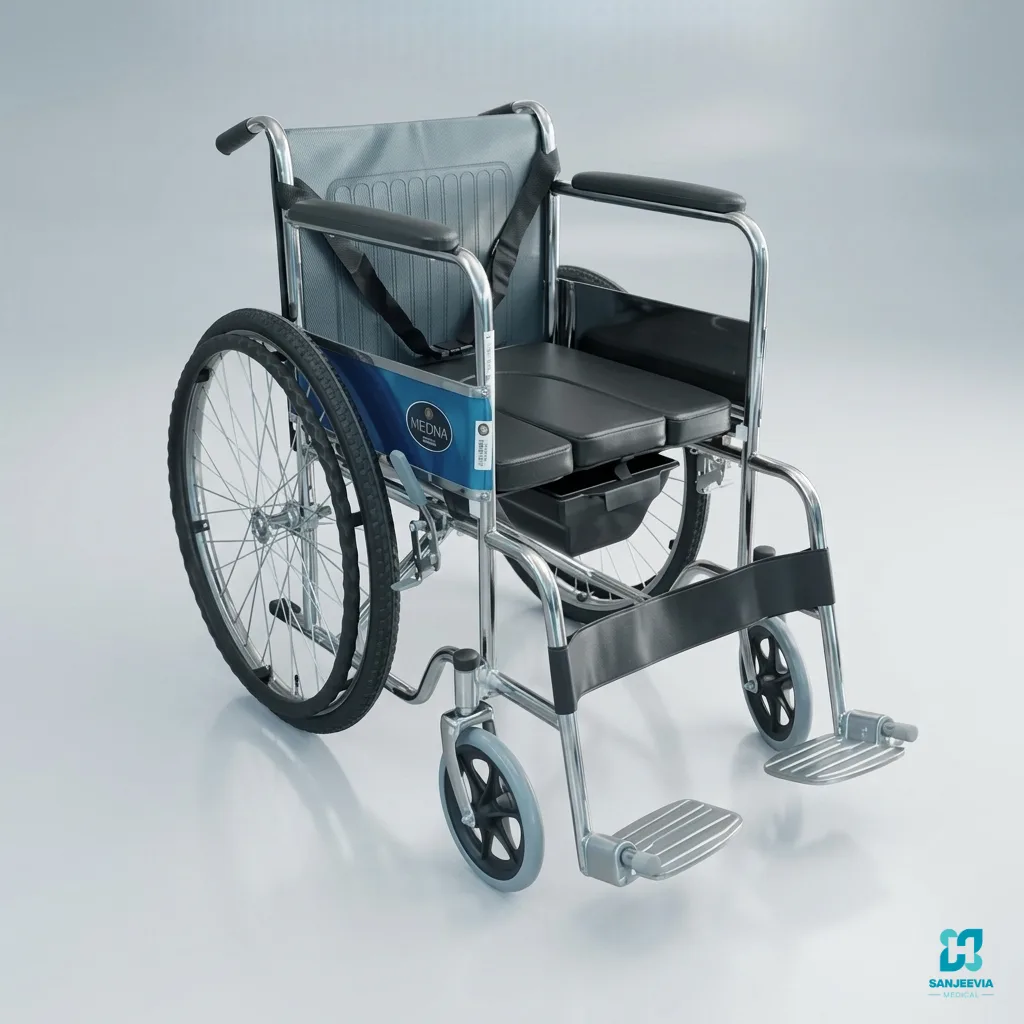
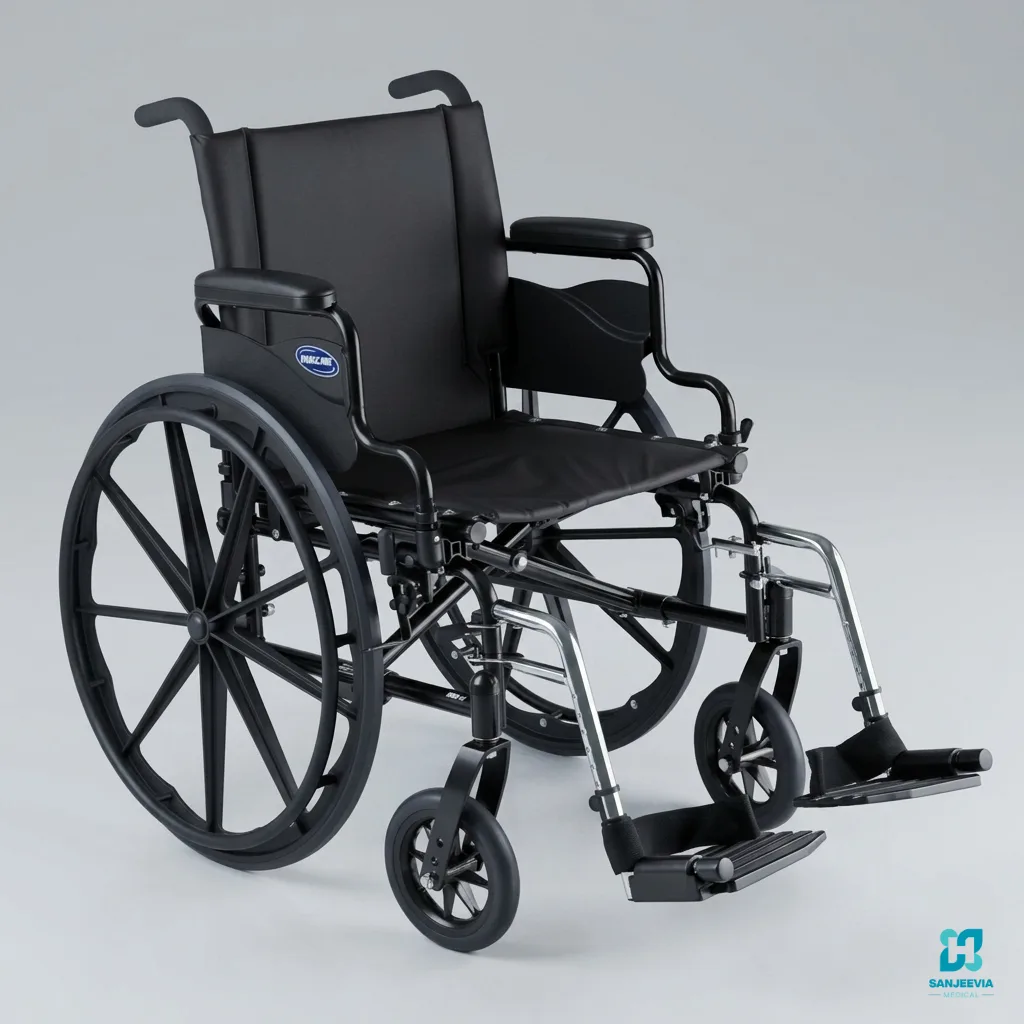
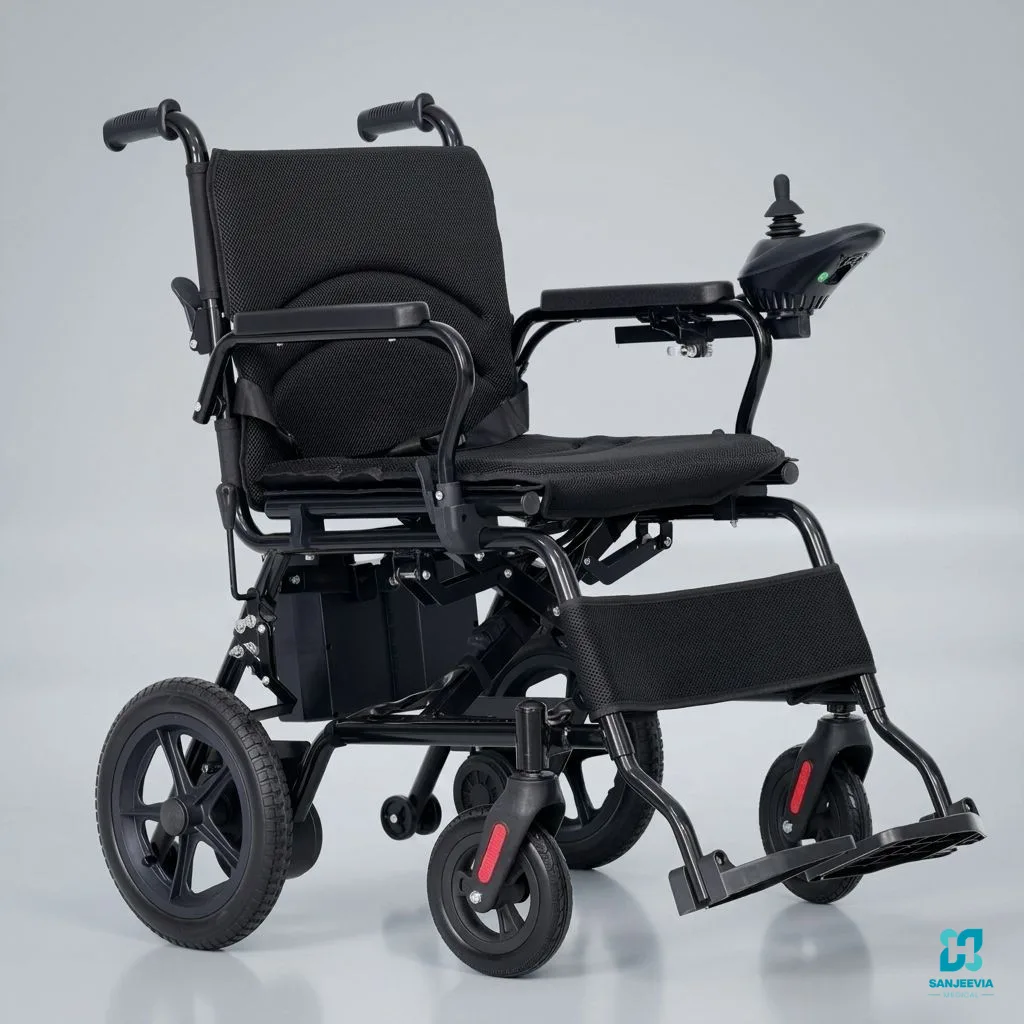
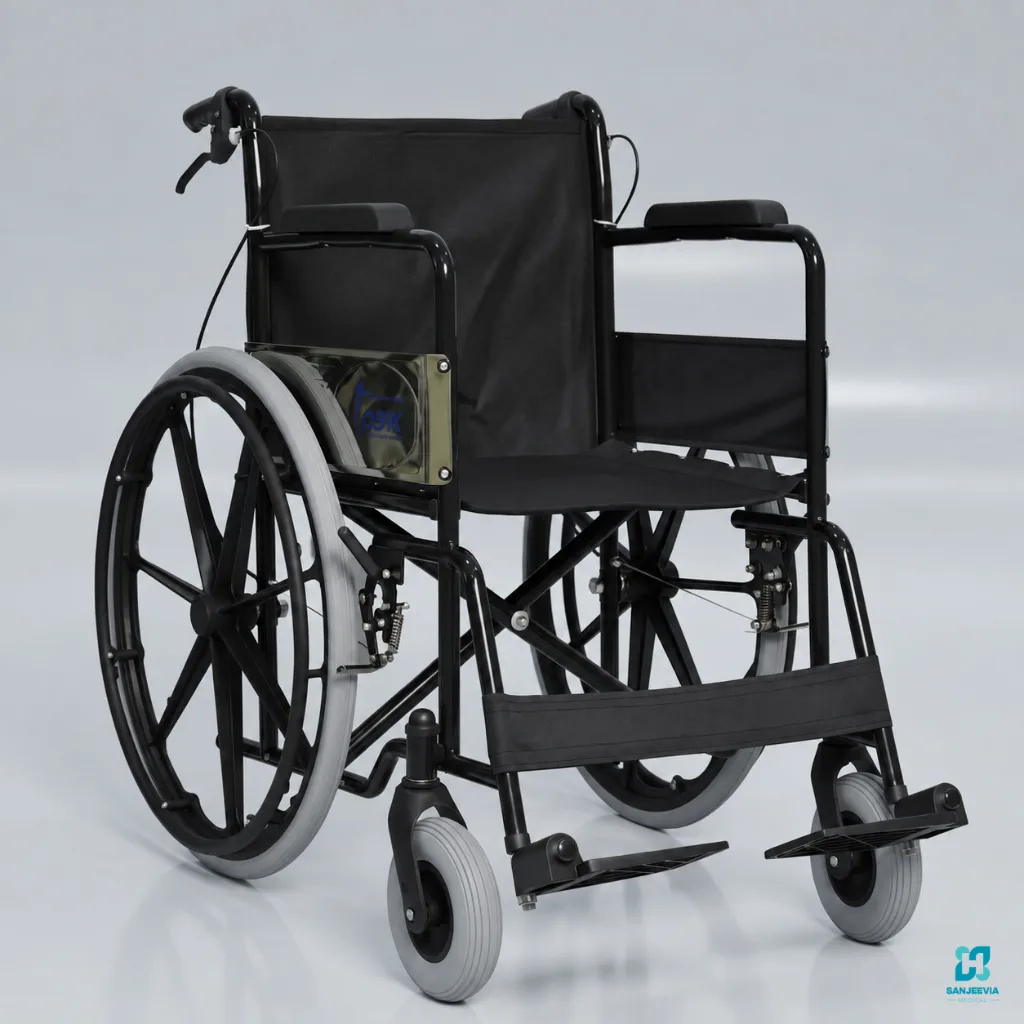
A standard manual wheelchair can be appropriate when the user can self-propel or has dependable caregiver assistance. A commode wheelchair may be useful when clinician-approved toileting support and bathroom access are central to the plan. A motorised wheelchair is a different decision: it needs safe user control, indoor space, charging arrangements and a suitability check – it is not simply a more convenient manual chair.
What to confirm before booking
- seat width, footrests and armrest configuration for safe transfers
- whether the chair must pass through bathroom and bedroom doorways
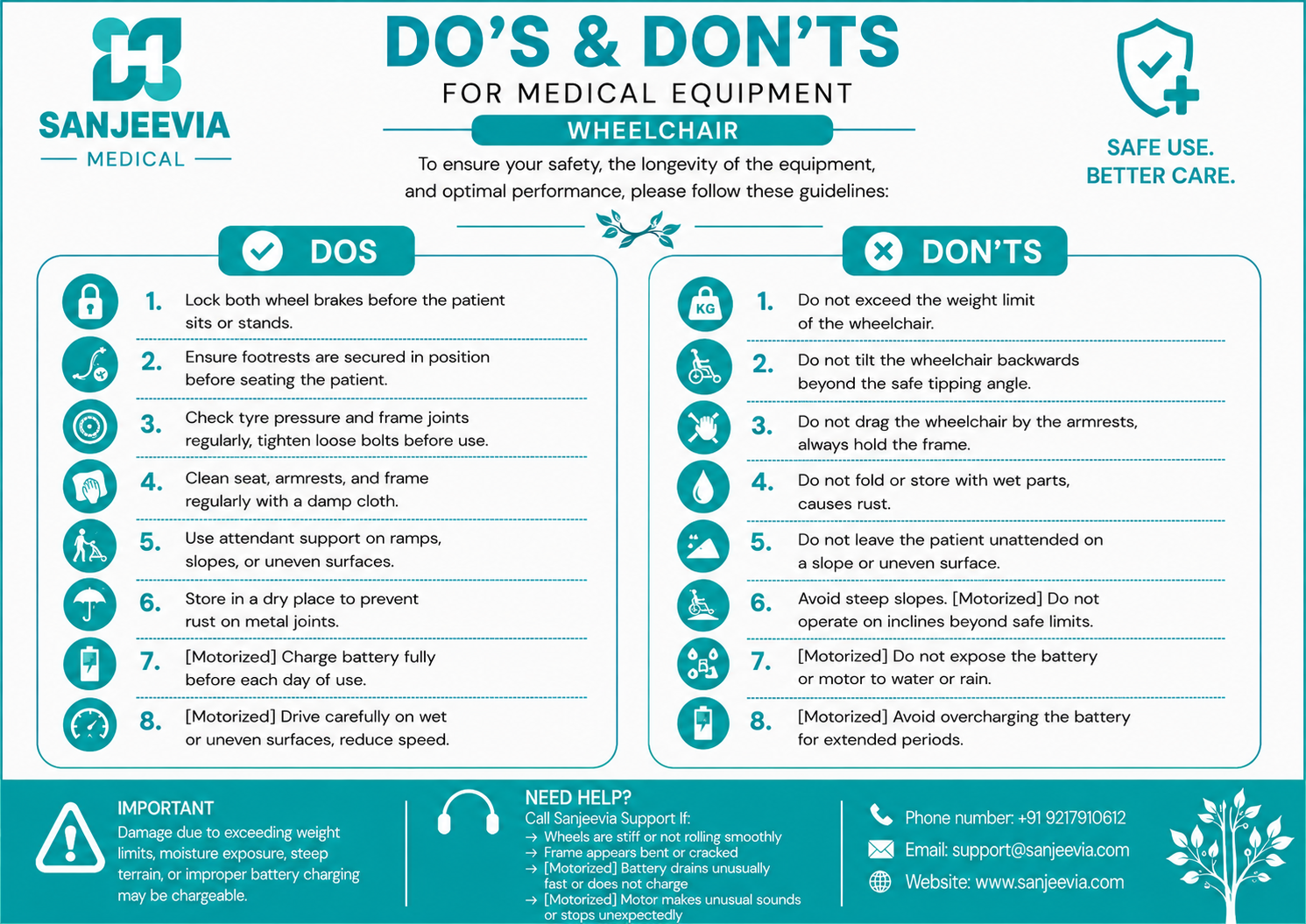
- brakes, footrests and basic handling demonstrated at handover
- who will propel, assist or supervise the user at home
Should You Rent or Buy?
Renting lets families test the practical fit while recovery, physiotherapy and follow-up plans become clearer. Buying can suit ongoing mobility needs, but it is worth confirming the expected duration, service support, storage and whether the user’s needs may change before deciding.
A Practical Booking Checklist
- Keep the prescription, discharge instructions or therapist recommendation ready where equipment is clinically prescribed.
- Ask for the exact model and included accessories in writing.
- Confirm the delivery route, room setup, handover and service contact before the booking is finalised.
- Ask about the current rental period, extension process, collection terms and purchase option where relevant.
Match the Wheelchair to the Daily Task
A standard manual chair supports basic mobility when the user can self-propel or a caregiver can push. A commode wheelchair can reduce repeated toileting transfers, but seat opening, hygiene routine and bathroom clearance must be checked. A motorised wheelchair may support independent movement when the user can operate it safely and the home has enough turning and charging space.
- Share user weight and approximate hip width.
- Measure the narrowest doorway, bathroom entrance and lift.
- Compare bed and chair heights used during transfers.
- Check steps, slopes, thresholds and transport needs.
Frequently Asked Questions
Can a commode wheelchair replace a standard wheelchair?
Not automatically. A commode chair is selected for specific toileting and transfer needs. The care team should guide whether it is appropriate for the user’s strength, balance and hygiene routine.
Can an elderly person use a motorised wheelchair at home?
Only when they can safely control it and the home has enough clear, level space. Discuss ability, supervision and charging arrangements before renting or buying.
Discuss the right option for your home-care plan: Manual Standard Wheelchair | Manual Commode Wheelchair | contact Sanjeevia for current availability and delivery details in Delhi NCR.
How to Compare Quotes and Support
Compare wheelchair quotes by the exact chair type, seat size, footrest and armrest configuration, delivery scope, rental period and service support. A low headline price does not help if the chair does not fit the user or cannot move through the home.
When to Involve the Care Team
Ask the physiotherapist or treating team about transfer technique, footrest use and whether toileting support changes the chair choice.
- Check the chair’s width against the narrowest doorway.
- Ask for a brake and footrest demonstration at delivery.
- Confirm who will assist the user on slopes, thresholds and transfers.
Medical Disclaimer
This article is for general informational purposes only and is not medical advice. Equipment selection, settings, patient positioning and transfer decisions must follow the treating clinician’s instructions.
Published by Sanjeevia Medical | sanjeevia.com | Delhi NCR
Related Guidance and Equipment
Wheelchair choice depends on transfers, propulsion and toileting needs; these links connect the functional assessment with exact wheelchair pages.
Continue Reading
- Home Care After Hip or Knee Replacement — prepare transfers and mobility after surgery.
- Renting vs Buying Medical Equipment — compare short-term use with long-term ownership.
Relevant Product Pages
- Standard Manual Wheelchair — review dimensions and features of a standard chair.
- Commode Wheelchair — review a wheelchair option that also supports toileting needs.