

It is common for an older husband or wife to become the main caregiver when their partner returns home from hospital. Their familiarity with one another is valuable, but the practical work may be new. An older caregiver may have their own joint pain, reduced grip, hearing difficulty or fatigue. Planning home equipment for an elderly caregiver should account for both people, rather than assuming love and experience make every task manageable.
Quick answer
Choose equipment around the patient’s assessed needs and the caregiver’s actual ability to use it. Check adjustment controls, reach, transfers, toileting, daily handling, alarms and backup help. Equipment may assist particular tasks, but it cannot replace the number of trained people or level of clinical care the patient requires.
Match equipment to both the patient’s assessed needs and the caregiver’s ability. Equipment does not replace the required trained assistance.
Plan around an ordinary day, including the difficult moments
Ask the older caregiver to describe breakfast, washing, toileting, appointments, evening medication routines and overnight needs. Which tasks require bending? Which happen when they are tired? Which require them to hear an alarm from another room? These questions often reveal a more useful equipment requirement than a generic shopping list.
Use the new caregiver checklist to record the responsibilities. The FDA’s home medical-device checklist encourages including caregivers in demonstrations and checking that they can use the equipment. A delivery demonstration should include the person doing the daily work.
Nine equipment decisions that matter
1. Decide which tasks need another person’s help
Start by separating tasks the caregiver can safely manage from those needing additional assistance. Be specific: adjusting a bed, moving a table, helping a transfer and responding to an alarm are different activities. A caregiver’s own health and confidence should be part of the assessment, not treated as an afterthought.
Arrange professional assessment for handling or transfers. Our caregiver transfer-plan guide helps families prepare that conversation. Do not test whether one person can lift the patient by attempting it without training.
2. Compare bed functions against the actual task
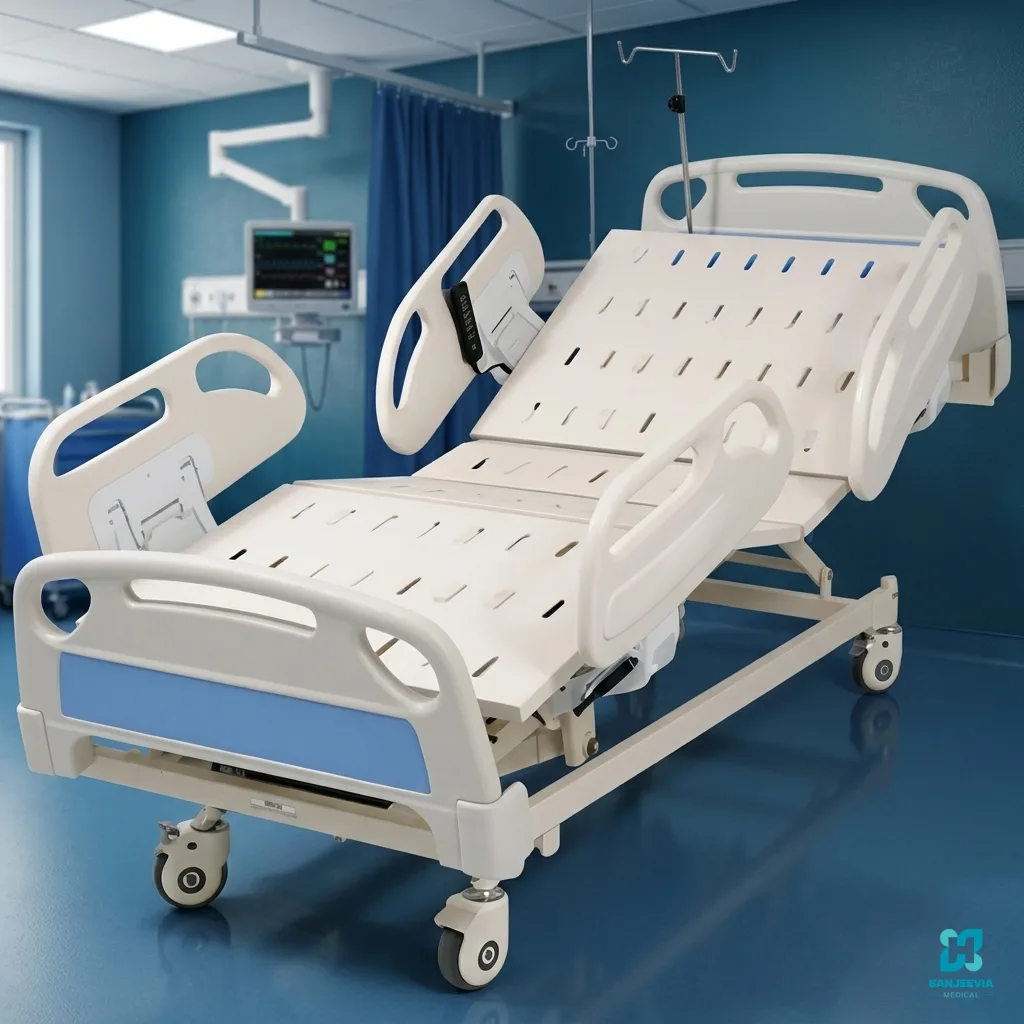
An electric backrest may reduce the effort of a particular manual adjustment. Height adjustment is a different function and must be confirmed separately. A bed called “electric” does not automatically offer every movement the family needs.
Compare the three-function electric bed with the prescribed positioning and transfer plan. Ask the provider to show each control, permitted movement and relevant precaution. Patient positioning still follows the treating team’s instructions. Side rails need individual assessment and must not be treated as a universal fall-prevention solution.
3. Put controls within comfortable reach
Check whether the caregiver can see the labels, distinguish the buttons and operate them without awkward stretching. Establish a safe place for the bed remote and a route for its cable that avoids moving parts and walkways. Do not use makeshift cable extensions or alter controls.
A practical demonstration is more informative than asking, “Do you understand?” Ask the caregiver to show the instructed operation back to the provider. Keep the supplied instructions accessible. Any authorised simplified notes should supplement, not contradict, the manual.
4. Plan toileting around the assessed transfer method
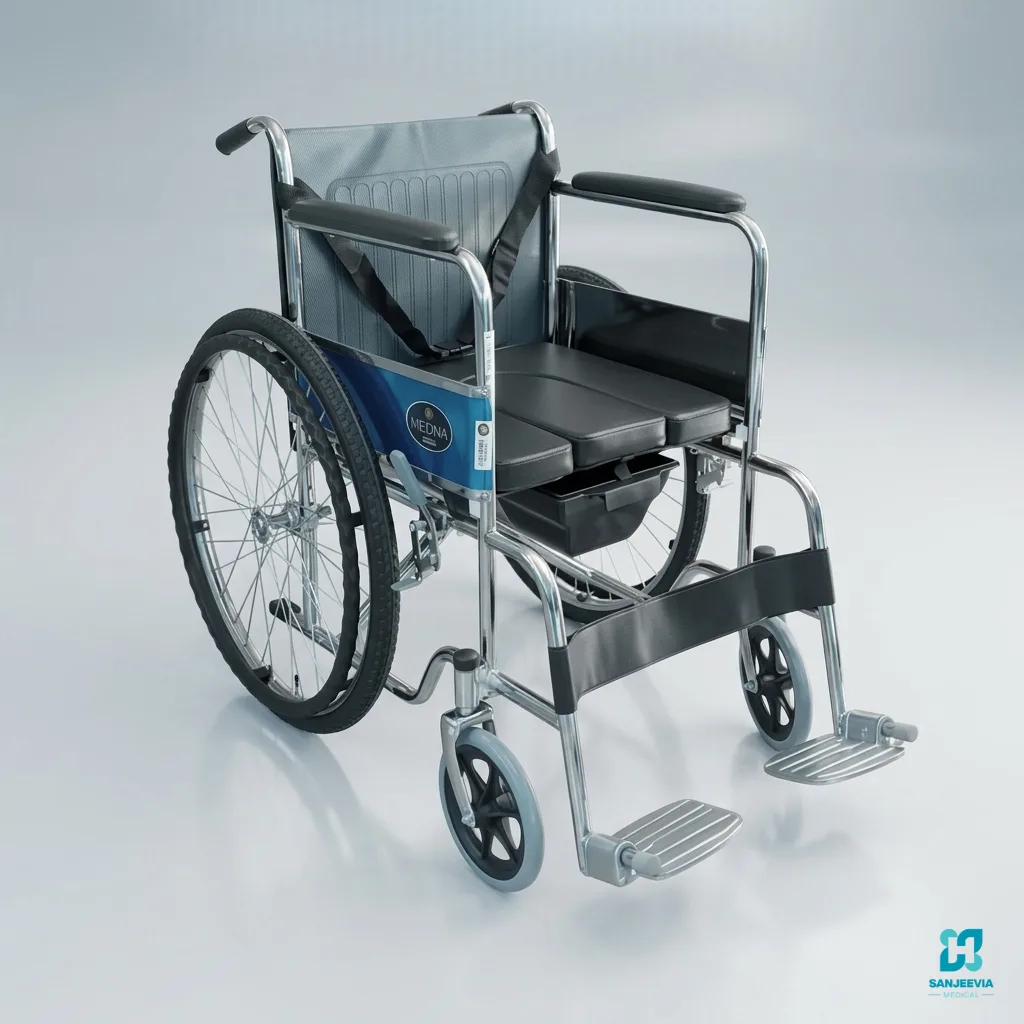
A shorter route to the toilet can seem helpful, but the full task includes getting up, transferring, positioning, clothing and cleaning. A bedside commode or commode wheelchair may be relevant only if the care team confirms the person can use it with the available assistance.
Review the commode wheelchair listing for an equipment enquiry after assessment. A wheeled commode is not automatically suitable for showering, and its name does not establish that it fits over the home’s toilet. Confirm the actual model’s intended use and dimensions.
5. Arrange daily items without creating a lifting support
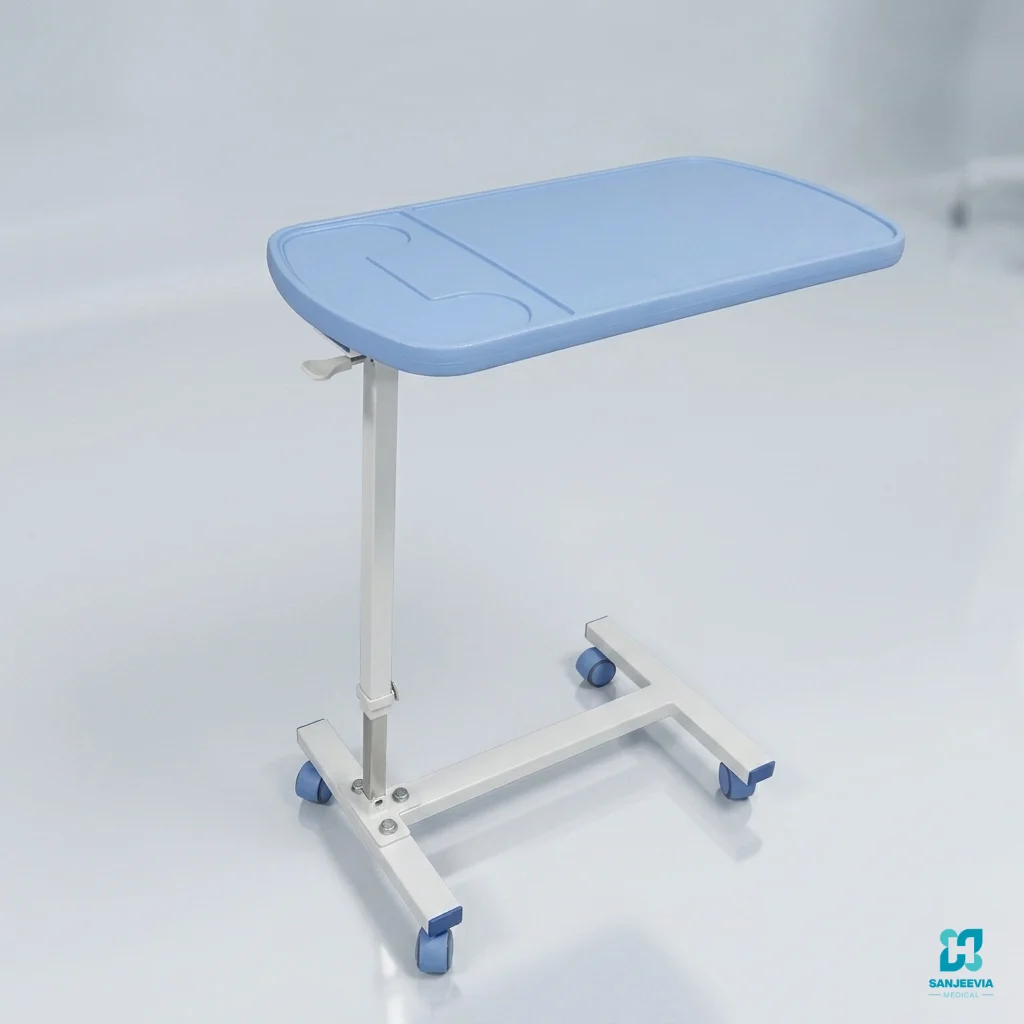
Meals, glasses, a phone and written instructions should have an accessible place. A height-adjustable over-bed table can provide a surface for light daily items, subject to its instructions and load limit.
It is not a walking aid, transfer support or something to pull on when standing. Check that its base fits around the bed, that it can be moved without trapping cables and that hot drinks are handled safely. The goal is an organised routine, not filling every available bedside space.
6. Check the route before choosing a mobility aid
A wheelchair or walking frame must suit the patient and the caregiver’s involvement. Consider doorway clearance, turns, floor changes and the effort required on the intended route. Do not assume a chair that rolls easily when empty will be equally manageable with its user.
Ask for assessment and a demonstration in realistic conditions. Use the elderly bedroom safety checklist to identify obstacles before equipment arrives. Keep emergency access and ordinary household movement clear.
7. Make alarm and contact arrangements usable
If monitoring or respiratory equipment is prescribed, identify who will hear alarms and respond according to the clinical plan. Hearing an alarm is not the same as knowing what it means. Confirm whether the caregiver can read the display and reach the device safely.
Do not solve an inconvenient alarm by switching it off or changing its limits. Ask the clinician and provider about the appropriate arrangement. A monitor does not create remote supervision, and a family member abroad cannot provide the immediate physical response an older caregiver may need.
8. Share cleaning, replenishment and record-keeping
Some recurring tasks are easy to overlook during the first delivery: following cleaning instructions, obtaining prescribed consumables, checking the equipment record and arranging review. Decide which family member or professional handles each task rather than leaving everything to the spouse at home.
Use the manufacturer’s instructions for cleaning products, frequency and parts. Do not improvise a cleaning mixture or open a device. A short responsibility sheet beside the written care plan can identify who is taking the next action without displaying private medical information to every visitor.
9. Plan for the caregiver being unavailable
An older caregiver may become unwell, have an appointment or simply need uninterrupted rest. Name a backup who understands the patient and equipment, and agree how they can be reached. A backup device cannot replace a missing trained person.
Record the equipment provider’s support arrangements separately from the clinical and emergency contacts. The NHS moving-and-handling guidance explains why training and appropriate help matter for both caregiver and patient. If the home plan relies on tasks the available caregiver cannot safely perform, ask the clinical team to reassess it.
A practical handover record for the family
| Task | What to record |
|---|---|
| Bed adjustment | Trained user, prescribed positioning instructions and equipment support contact |
| Patient transfer | Assessed method, required assistance and who provides it |
| Toileting | Approved aid, route, assistance and cleaning responsibility |
| Prescribed monitoring | Who observes, clinician-set instructions and escalation contact |
| Caregiver absence | Named replacement, availability and handover record |
For an equipment enquiry, explain the patient requirement, home layout and the practical difficulty the caregiver is experiencing. Sanjeevia can help review listed equipment and confirm model details and availability. It cannot establish that a patient is safe to be left with one caregiver. Use Help Me Choose or contact Sanjeevia once the clinical and handling requirements are clear.
Frequently asked questions
Does an electric hospital bed mean one elderly person can manage all care?
No. It may assist bed adjustments, but transfers, personal care and clinical tasks still need individual assessment and appropriate assistance.
Should the main caregiver attend the equipment handover?
Yes, wherever possible. They should understand the instructions and demonstrate the operations they are expected to perform.
Can an over-bed table help someone stand up?
No. It is a surface for permitted items, not a body-weight or transfer support. Use only aids recommended for that purpose.
What if the caregiver cannot hear a prescribed device’s alarm?
Tell the clinician and equipment provider before relying on the setup. An appropriate observation and response arrangement is needed; do not simply silence alarms.
Can relatives abroad manage the equipment plan?
They can help coordinate bookings and records, but the plan still needs capable local people for handover, daily assistance and urgent situations.
Educational family-planning guide. Sources and catalogue checked on 22 October 2026. Equipment and caregiver requirements must be assessed individually. Cover image is illustrative.
Next Read
To separate staffing and equipment responsibilities, read Home Nurse, Care Attendant or Medical Equipment Rental? 7 Differences Families Should Understand.
