
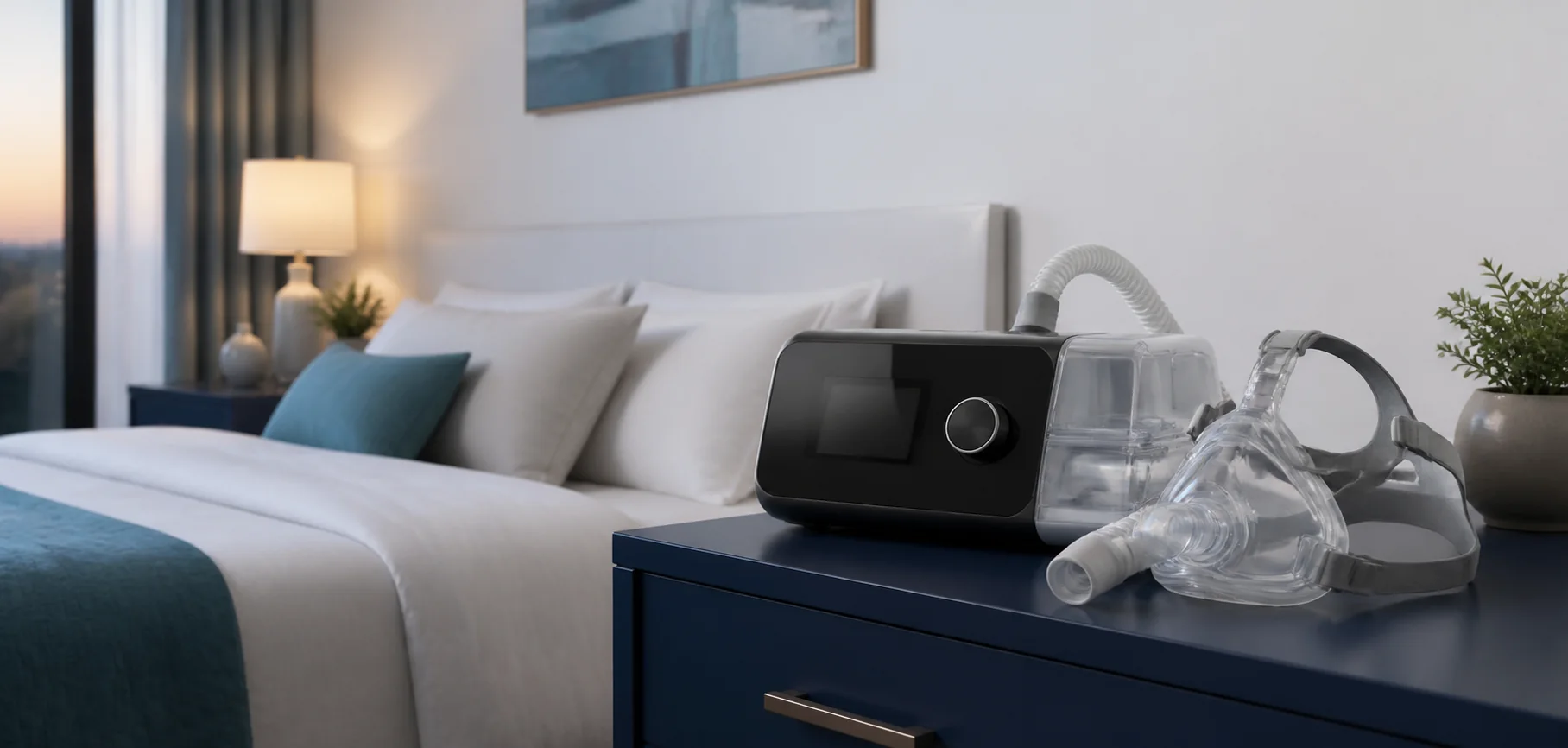
Quick answer: CPAP ramp is a start-of-session comfort feature that begins with a lower pressure before moving into prescribed therapy. A timed ramp uses a selected duration; AutoRamp on ResMed AirSense 10 AutoSet responds to detected sleep onset. Ramp is different from APAP’s pressure-response algorithm and from pressure relief during exhalation. The available controls depend on the exact machine, so confirm the model and demonstrated settings at handover.
How ramp works on ResMed AirSense 10 AutoSet
The ResMed AirSense 10 AutoSet/Elite user guide, English page 6, lists Ramp Time as Off, a duration from 5 to 45 minutes, or Auto. These are model-specific options, not settings to assume on every CPAP.
| Ramp option | What it does | What to confirm |
|---|---|---|
| Timed ramp | Provides a planned transition from the lower starting pressure into treatment over the selected period. | Demonstrated duration and the authorised start-pressure setting. |
| AutoRamp | Detects sleep onset before raising pressure into the prescribed therapy. It does not follow a fixed sleep schedule. | That Auto is available and selected on the actual AirSense 10 unit. |
| Off | Removes the ramp delay; operation follows the configured therapy mode. | Whether this matches the individual setup plan. |
For an auto-adjusting device, ResMed explains that the end of ramp is when its algorithm begins monitoring and responding to breathing patterns. See the manufacturer’s Air Solutions ramp FAQ. AutoRamp and AutoSet are different features: one addresses the beginning of a session, while the other controls APAP response during treatment.
Ramp is not APAP, pressure relief or bilevel support
- Ramp: changes how therapy starts.
- Fixed CPAP or APAP: describes the prescribed treatment mode. APAP adjusts within the clinician-set range; fixed CPAP uses a set treatment pressure. Read the fixed CPAP versus Auto CPAP guide.
- Expiratory pressure relief: affects pressure during exhalation when enabled on a supported model. It is separate from ramp and must be reviewed in the context of the prescribed setup.
- BiPAP: uses separately prescribed inspiratory and expiratory pressures and model-specific modes. Ramp does not turn CPAP into bilevel or supply a timed backup breath. If bilevel is prescribed, review the BiPAP device category rather than selecting CPAP for its comfort controls.
What about Basic CPAP and Deck Mount VT30 D?
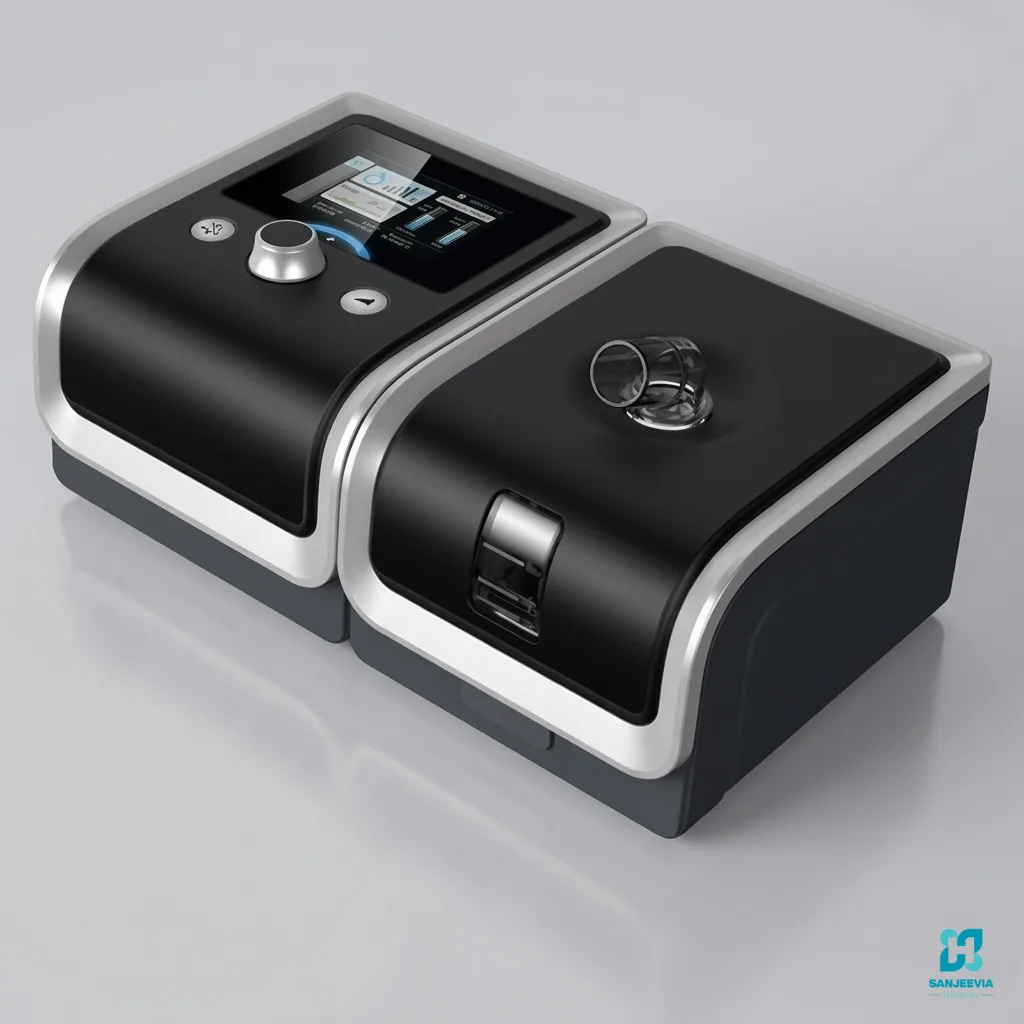
Sanjeevia’s Basic CPAP listing can supply a confirmed ResMed S9 or BMC fixed-pressure unit. Ask for the exact model and its manual: do not assume AirSense 10’s AutoRamp, menu names or timing apply to every Basic machine. Have the ramp function demonstrated on the assigned unit.
The Deck Mount VT30 D listing describes CPAP and Auto CPAP with ramp options. Its Auto behaviour must be explained using that model’s supplied manual; it should not be labelled ResMed AutoRamp or assumed to use the same algorithm. That listing is currently purchase only. The CPAP and APAP catalogue separates rental-enabled devices from purchase-only options.
What to ask at handover or when ramp feels uncomfortable
- Record the exact device and prescribed fixed pressure or APAP range.
- Ask the provider to demonstrate the available ramp menu, selected option and how the machine indicates the transition into therapy.
- Confirm which comfort controls the care team permits you to change. Do not enter clinical menus or alter prescribed pressure or range from this article.
- If the start feels like too little air, the transition feels abrupt, or discomfort persists, record whether it occurs during ramp or after it ends. Share the mask, leak information and current ramp option with the provider and prescribing team.
There is no single best ramp duration for everyone. Repeatedly restarting therapy to remain at a lower starting pressure is not a substitute for review. For equipment preparation and mask fitting, use the CPAP first-night checklist; those are separate questions from how ramp works.
CPAP ramp FAQs
Does AutoRamp mean I have an Auto CPAP prescription?
No. AutoRamp is a comfort feature. The supplied device must still be configured for the prescribed CPAP or APAP mode.
Is the longest ramp always better?
No. Discuss comfort and the transition into effective treatment with the care team. Do not choose a duration solely because a blog or another patient recommends it.
Can ramp fix a leaking mask?
It does not repair mask fit, damaged tubing or a worn cushion. Ask for a fit check and identify whether the leak appears during ramp or at treatment pressure.
Where do rental costs belong?
For current charges, deposits and duration comparisons, read CPAP rental versus purchase. This page explains the start-of-therapy feature rather than repeating a rental decision guide.
Published by Sanjeevia Medical. Manufacturer references checked on 7 October 2026. General equipment education; follow the exact manual and prescribing team’s instructions.