
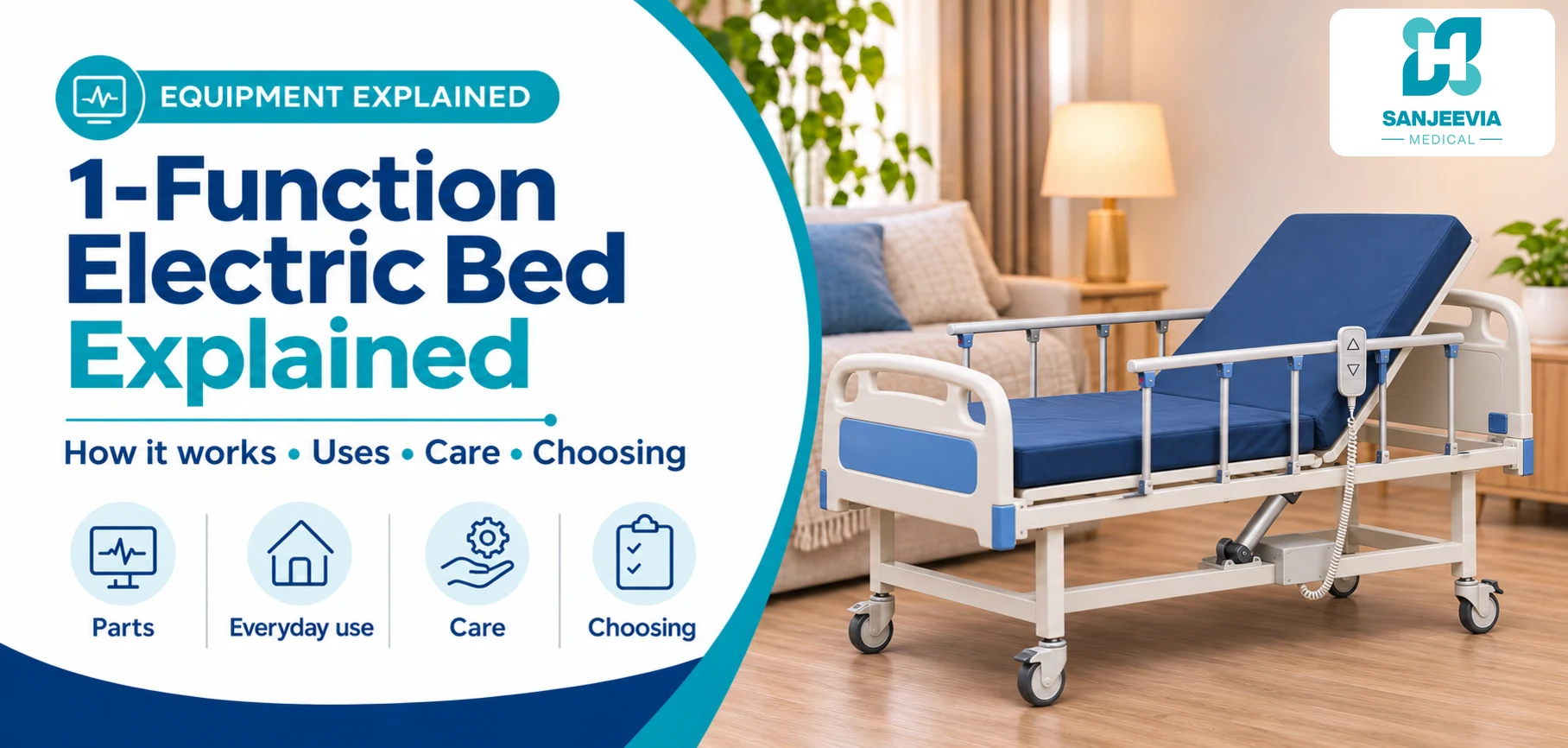
A one-function electric bed has fewer buttons than an ICU bed, but the same basic question still matters: which part actually moves? Families sometimes expect height or knee adjustment from a bed whose only powered function is the backrest.
Quick answer: A 1-function electric bed uses a motor and wired handset to raise or lower the backrest. The platform height and knee section remain fixed on this configuration, so confirm those limitations before delivery.
Explore relevant equipment
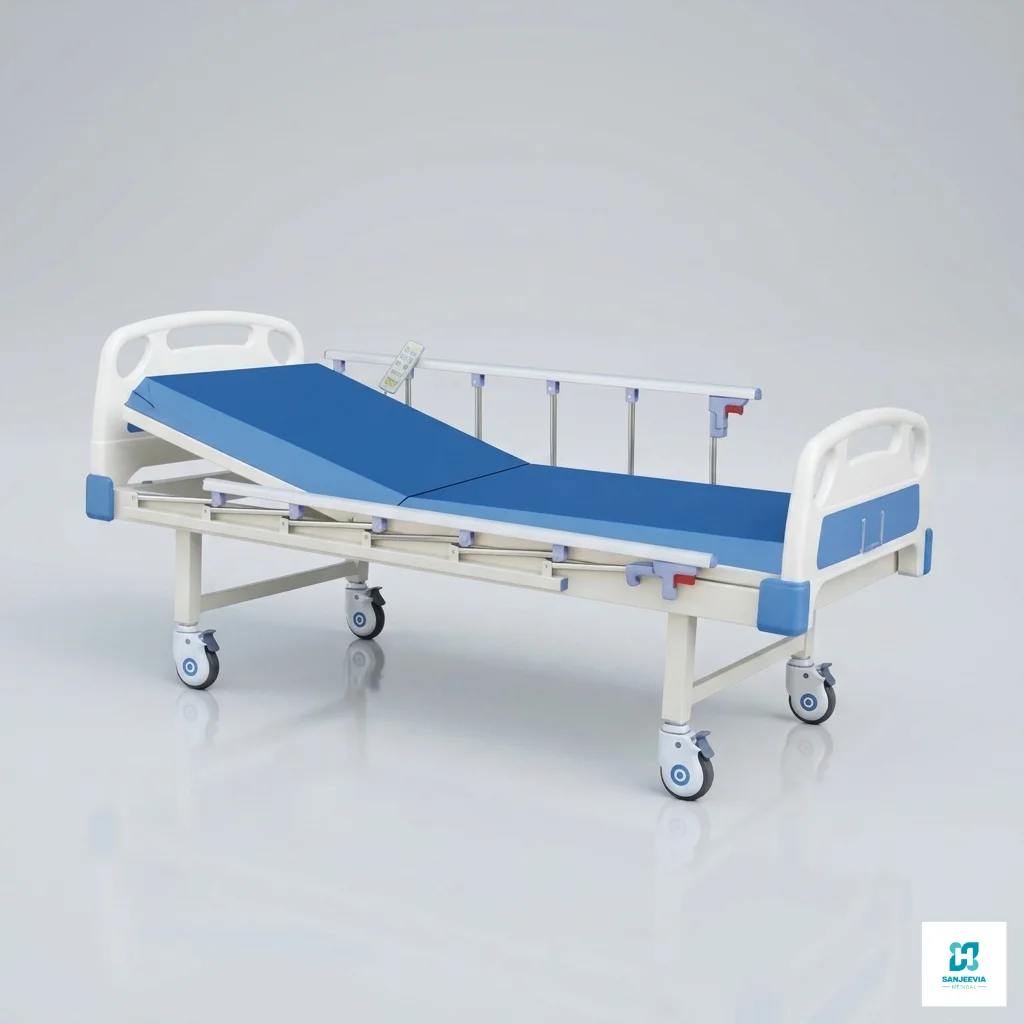
1 Function Electric Bed
Review the live listing for the confirmed configuration, included parts and current Delhi NCR rental or purchase options.
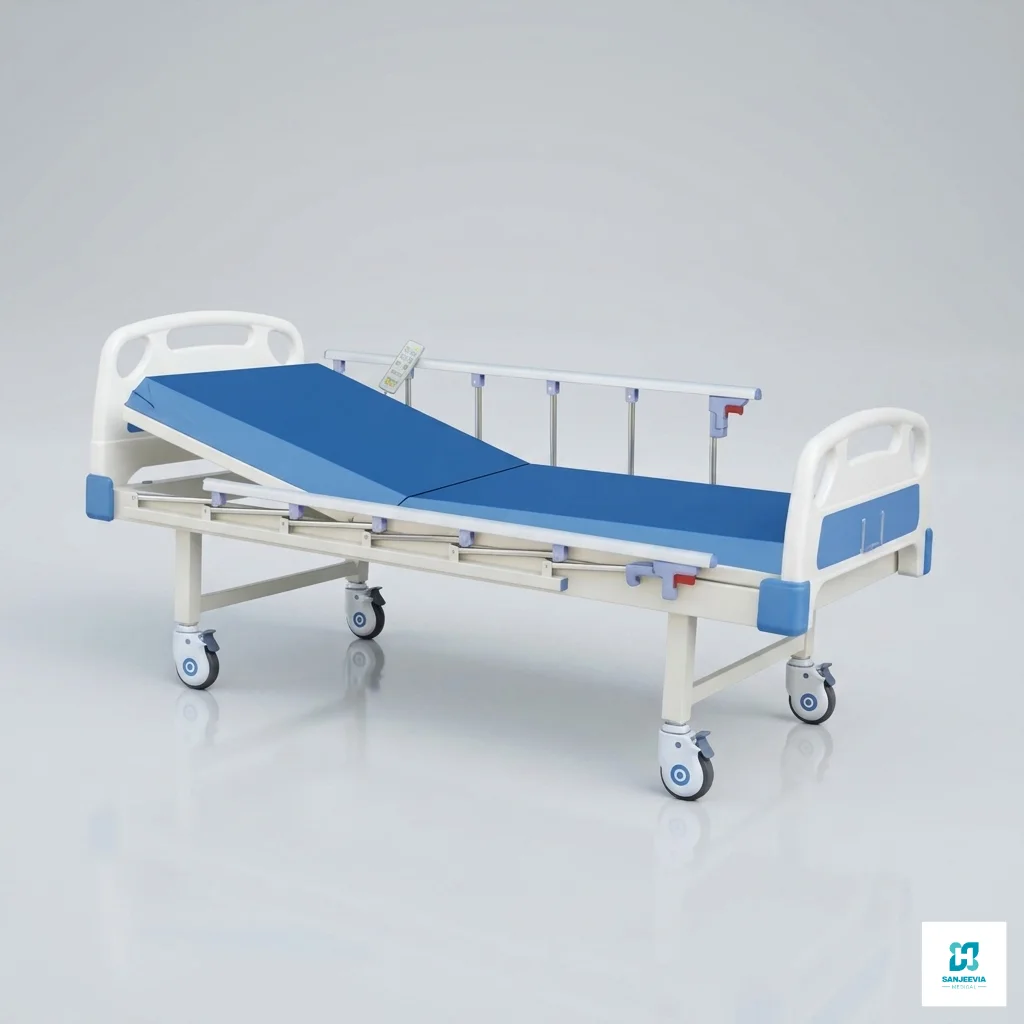
1 Function Hybrid Electric Bed
Review the live listing for the confirmed configuration, included parts and current Delhi NCR rental or purchase options.
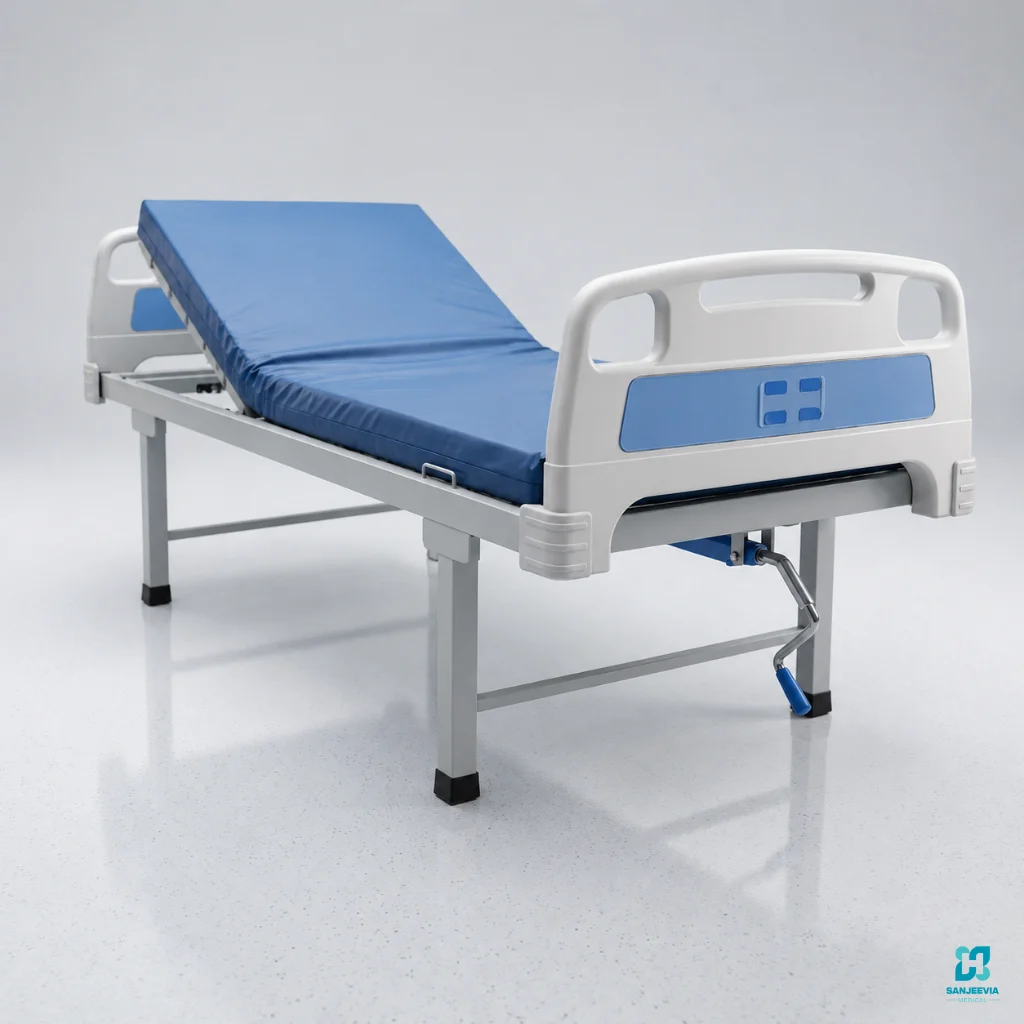
Manual Semi Fowler Bed – ABS Side Rails
Review the live listing for the confirmed configuration, included parts and current Delhi NCR rental or purchase options.
Confirm the exact bed, mattress, rails, accessories, room access and handover before booking.
Jump to equipment details
What the “one function” controls
The wired handset sends a command to the actuator, which changes the backrest section. Pressing one direction raises the upper deck; the paired direction lowers it. The exact labels and movement range belong to the supplied model and should be demonstrated at handover.
This configuration does not automatically include powered knee adjustment or whole-bed height adjustment. A fixed-height bed can still support an individual positioning plan, but it may not solve a low-transfer height or caregiver bending problem.
Electric movement reduces manual cranking and may allow an appropriate user to adjust their own upper-body support. It does not make unsupervised positioning suitable for everyone.
Parts, controls and terminology
| Part | Role | Check |
|---|---|---|
| Backrest actuator | Produces the single powered movement. | Secure, quiet and free of exposed damage. |
| Wired handset | Raises or lowers the backrest. | Labels readable, cable intact, buttons release normally. |
| Power cable and plug | Connect the bed to mains power. | No cuts, crushing, loose pins, heat or liquid exposure. |
| Sectioned mattress | Follows the backrest hinge. | Correct fit, intact cover and no bunching. |
| Rails and latches | Provide a barrier where assessed. | Compatible with mattress and user; fully locked. |
| Castors and brakes | Position and stabilise the bed. | All brakes work on the actual floor. |
Do not confuse “one function” with one handset button: up and down usually appear as two buttons but operate the same backrest function.
Everyday operating routine
- Apply brakes and check the bed is stable.
- Inspect the mattress hinge, linen, rails and all attached tubing.
- Tell the user the backrest is about to move.
- Press and hold the correct button while watching the user and mechanism.
- Release the button at the prescribed position; do not repeatedly pulse the control without reason.
- Stop if the bed jerks, stalls, sounds abnormal or pulls a cable or tube.
- Store the handset where it is reachable only by the intended user or caregiver.
Movement should be observed, not operated from another room. Never place hands, bedding or equipment beneath a moving deck.
Power cuts, sockets and cable routing
Confirm whether the exact model has a battery or emergency-lowering provision. Many basic electric beds do not. During an outage the bed generally stays in its last physical position but cannot be adjusted until power returns or the model’s approved procedure is used.
Use the plug and socket arrangement specified at handover. Keep the cable away from castors, moving links and wet cleaning. Do not run it where people walk or beneath a rug. An extension board should be used only if the bed manufacturer or competent supplier confirms the rating and setup.
Know which position you would prefer before a planned outage and keep caregiver access available. Never open the actuator or control box to improvise manual movement.
Common mistakes and warning signs
- Expecting knee or height movement from the single-function bed.
- Leaving the plug trapped behind the headboard or under a castor.
- Using the handset cable to pull or hang the control.
- Operating the backrest while tubing, drainage bags or linen are caught.
- Using incompatible rails, mattress overlays or a household mattress.
- Continuing after a burning smell, hot plug, damaged cable or intermittent movement.
- Allowing a confused user or child to activate the control unsupervised.
Disconnect the bed and arrange service when electrical damage is suspected. Do not tape a damaged power or handset cable as a permanent repair.
Need help matching the bed?
Share the patient’s mobility, transfer method, required bed movements, mattress needs and delivery access. Sanjeevia can help confirm the configuration and current Delhi NCR options.
Cleaning and routine checks
Unplug before cleaning unless the instructions say otherwise. Wipe the handset, rails and frame with a compatible cleaner, preventing moisture entering buttons, connectors, the actuator or control box. Remove visible soil before disinfection and allow the bed to dry before reconnection.
Inspect the plug, cables, strain relief, handset, actuator mounts, moving hinges, rail latches, castors, brakes and mattress cover. Test movement on the empty bed after delivery, cleaning, relocation or service.
Preventive maintenance should be performed by a competent provider. Keep the model identity and fault contact with the rental record.
Questions before renting or buying
- Is powered backrest adjustment the only movement required?
- Does the patient need self-control, or should the handset be caregiver-managed?
- Is the fixed platform height suitable for transfers and caregiving?
- Which mattress, rails and accessories are included?
- What socket and power-failure plan does the exact model require?
- Will it pass the lift, door and corridor and still leave caregiver space?
- What happens if the motor or control fails during the rental?
Read the power-cut planning guide and compare the manual semi-Fowler bed if electricity or caregiver preferences affect the choice.
Frequently asked questions
Why are there two buttons if it is one function?
They usually move the same backrest function up and down.
Does the whole bed go higher?
Not on this configuration. Confirm a separate height function if it is needed.
Can it be used without power?
The bed remains a support surface, but powered adjustment may stop. Confirm the exact model’s approved outage procedure.
Can the patient keep the handset?
Only if cognition, strength, lines and the care plan make independent control appropriate.
Explore your equipment options
1 Function Electric Bed
Review the live listing for the confirmed configuration, included parts and current Delhi NCR rental or purchase options.
1 Function Hybrid Electric Bed
Review the live listing for the confirmed configuration, included parts and current Delhi NCR rental or purchase options.
Manual Semi Fowler Bed – ABS Side Rails
Review the live listing for the confirmed configuration, included parts and current Delhi NCR rental or purchase options.
Confirm the exact bed, mattress, rails, accessories, room access and handover before booking.
Sources and useful reading
- MHRA: Bed rails—management and safe use.
- FDA: Hospital bed system guidance to reduce entrapment.
- NHSRC India: Biomedical Equipment Management and Maintenance Programme.
- CDC: Environmental cleaning procedures and noncritical equipment.
- Sanjeevia 1 Function Electric Bed listing.
- UK HSE: Equipment safety in health and social care.
Prepared by Sanjeevia’s editorial team. Updated 10 November 2026. Confirm electrical, positioning and transfer requirements for the individual user.
