
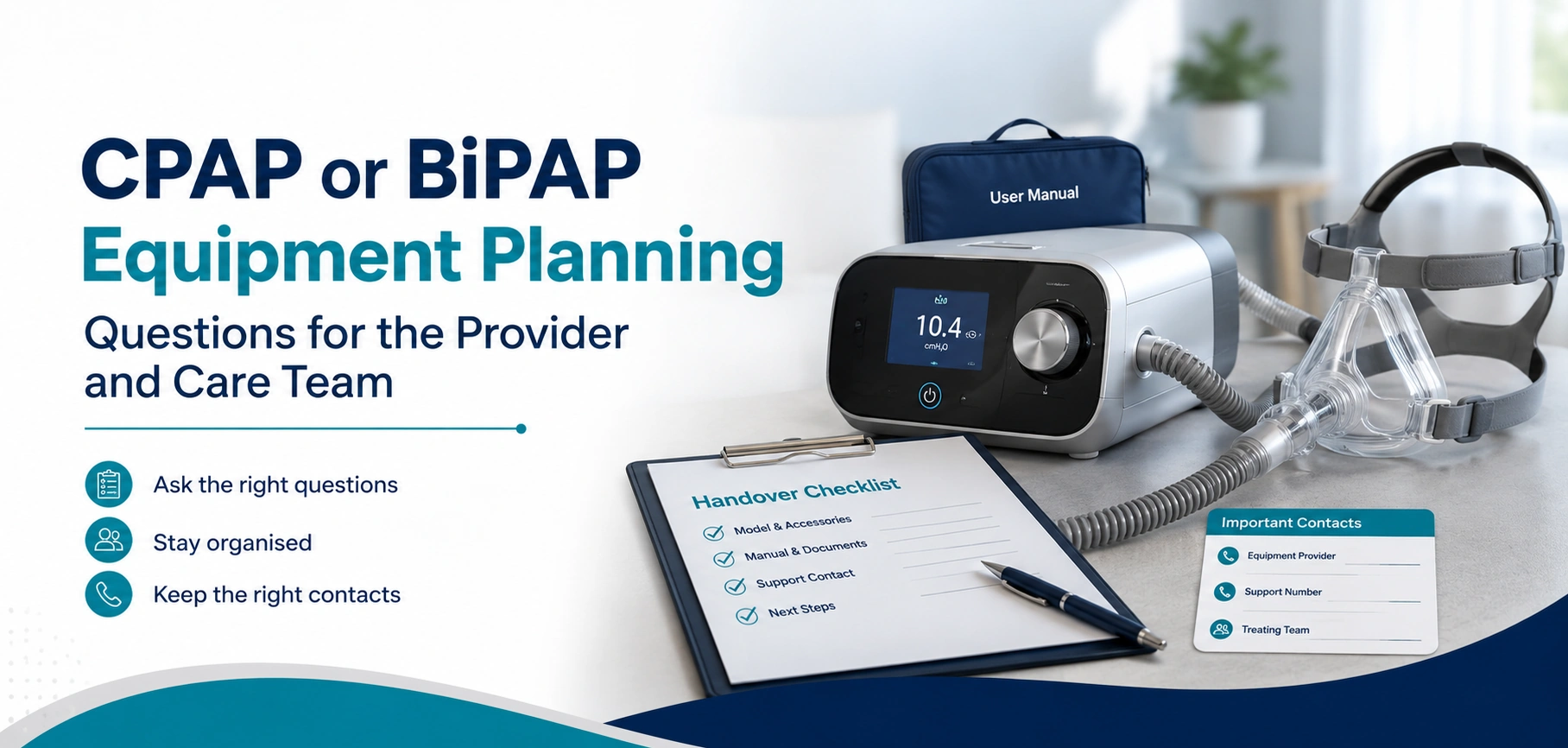
Quick answer: A power-cut plan for CPAP or BiPAP should be based on how medically important uninterrupted therapy is, the exact device’s electrical requirements and a manufacturer-compatible backup solution. Do not assume that every battery, inverter or UPS is suitable.
Questions for the treating team
- How important is uninterrupted overnight therapy for this patient?
- What should the patient do if therapy stops temporarily?
- Is supplemental oxygen also prescribed, and what is its separate interruption plan?
- Which symptoms require urgent medical help?
Questions for the equipment provider
- What is the exact device model and its DC or AC power specification?
- Does the manufacturer approve a particular battery or converter?
- How does humidifier or heated-tube use affect backup duration?
- What alarms or messages appear after power is restored?
- Will prescribed settings remain stored?
A backup estimate must account for the exact pressure, mode, humidifier, battery condition and manufacturer test assumptions. Do not promise a universal number of hours.
Before an expected outage
- Keep the device manual and support contacts available.
- Charge the approved backup as instructed.
- Check cables and connectors for damage.
- Confirm the clinical response plan with the treating team.
- Do not use improvised power adapters or connect medical equipment to an unverified supply.
Related Sanjeevia pages
- Basic CPAP equipment
- ResMed AirSense 10 specifications
- Auto CPAP vs fixed CPAP
- CPAP mask-selection questions
This guide covers equipment and contingency questions. It does not change prescribed PAP therapy or replace emergency instructions.