
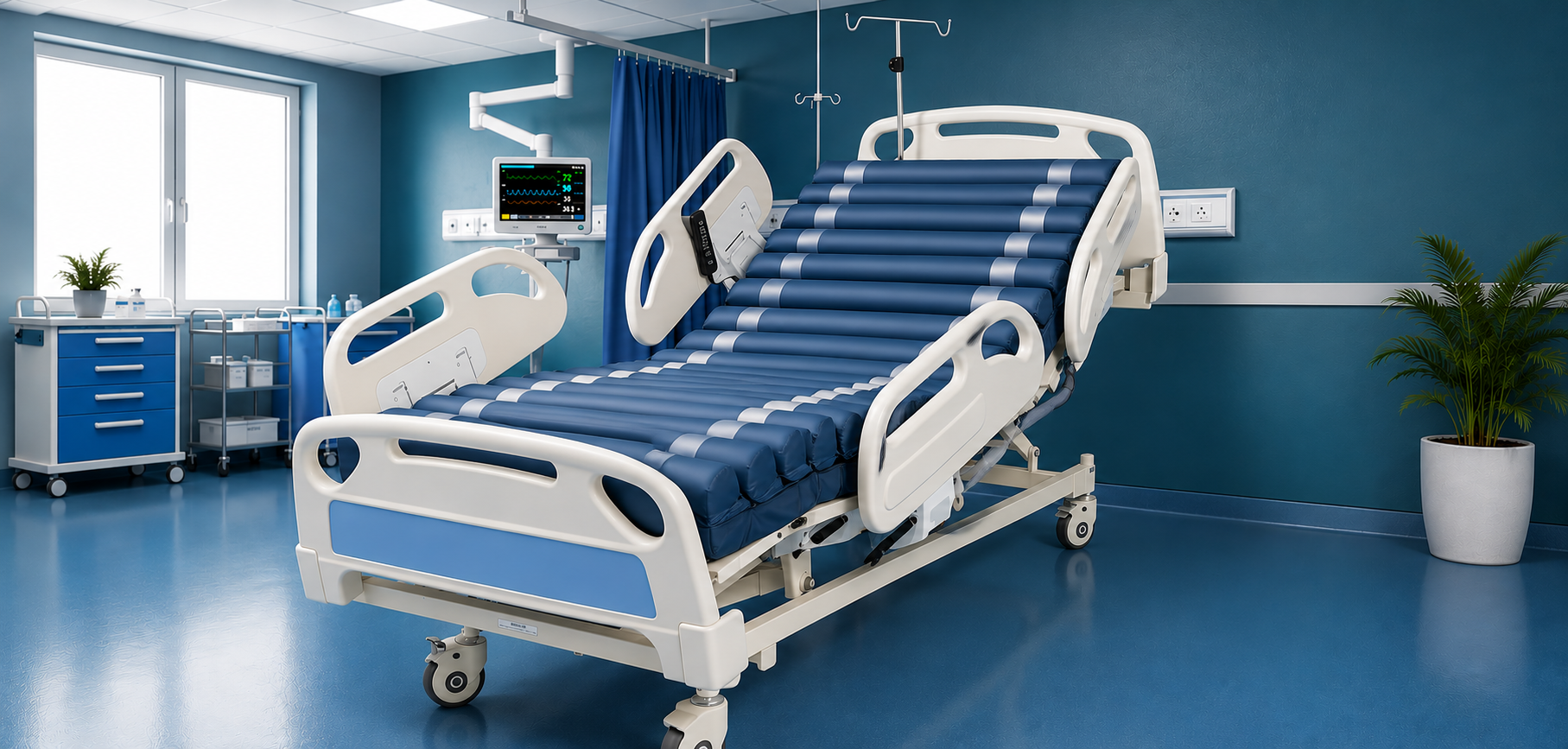
Quick answer: A pressure-redistributing mattress may be appropriate when a person is at risk of a pressure injury or already has skin damage, but the choice should follow an individual risk and skin assessment. A mattress does not replace repositioning, skin care, nutrition, continence care or treatment by a healthcare professional.
“Anti-bedsore mattress” is a common search term. Healthcare guidance usually uses terms such as pressure-redistributing mattress, high-specification foam mattress and dynamic or alternating-pressure surface.
Who may need a pressure-redistributing surface?
Risk can increase when a person:
- cannot change position independently;
- spends prolonged periods in bed or a chair;
- has reduced sensation, poor circulation or fragile skin;
- has moisture or continence-related skin problems;
- has poor nutritional intake or recent significant weight loss;
- has a previous or current pressure injury; or
- uses medical devices that apply pressure to the skin.
No simple “two risk factors” rule can determine the correct mattress. A nurse or other qualified clinician should assess the person’s mobility, skin, comfort, body size, care environment and existing equipment.
There is no universal two-hour rule
Repositioning frequency should be recorded in an individual care plan. It depends on assessed risk, skin response, comfort, ability to move and the support surface being used.
NICE guidance on repositioning recommends documented advice and an individualised frequency. It does not support presenting every-two-hour turning as the correct schedule for all people.
An alternating-pressure surface changes pressure distribution, but it does not turn the person or remove the need for repositioning and skin inspection.
Types of support surface
High-specification foam mattress
Clinical guidance commonly recommends high-specification foam for adults assessed as being at risk. The exact mattress must fit the bed platform and the person’s needs.
Dynamic or alternating-pressure mattress
A powered surface may be considered when the current surface is not adequately redistributing pressure or when the clinical assessment identifies a need. “More complex” does not automatically mean better for every person. Comfort, noise, movement, power dependence and safe transfers also matter.
See NICE recommendations on pressure-ulcer prevention and management.
Check compatibility with the bed and rails
Do not assume that any overlay can be placed on any mattress or hospital bed. Adding an overlay can raise the sleeping surface, reduce the effective height of side rails and create an entrapment or fall hazard.
Before use, confirm:
- the bed platform dimensions and mattress-retainer requirements;
- whether the product is a replacement mattress or an overlay;
- the manufacturer’s permitted base mattress;
- the person’s weight range and product weight limit;
- side-rail and mattress compatibility;
- safe transfer height and transfer method;
- power-failure behaviour for a powered surface; and
- cleaning and infection-control instructions.
The UK medical-device guidance on bed rails explains that mattresses and overlays can change rail height and entrapment risk. Suitability must be assessed for the individual bed and patient.
Skin checks and warning signs
Check the skin as directed in the care plan, especially over bony areas and under medical devices. Concerning changes include persistent non-blanching redness or discolouration, heat, swelling, hardness, pain, blistering or broken skin.
Report a concerning change promptly to the responsible clinician or wound-care team. Do not massage reddened or damaged skin, and do not rely on a mattress to treat an established wound without clinical assessment.
Other parts of pressure-injury prevention
- Follow the individual repositioning and mobility plan.
- Keep skin clean and manage moisture as advised.
- Use transfer techniques that reduce friction and shear.
- Ensure heels and medical-device pressure points are assessed.
- Follow nutrition and hydration advice from the care team.
- Keep bed linen smooth and free of objects that create pressure.
Choosing equipment through Sanjeevia
Sanjeevia can confirm dimensions, construction, weight limits, cleaning instructions and compatibility information for available equipment. The clinical team should determine the required pressure-redistribution category and repositioning plan.
Related equipment and guidance:
- One-section medical bed mattress
- Two-section medical bed mattress
- Four-section medical bed mattress
- How to set up a hospital bed at home safely
Frequently asked questions
Does an alternating mattress mean the patient does not need turning?
No. Follow the individual repositioning plan unless the responsible clinician changes it.
Should every bedbound person use the same mattress?
No. Surface selection depends on risk, skin condition, mobility, comfort, weight, bed compatibility and care needs.
Can an overlay be used with side rails?
Only after confirming compatibility and completing an individual risk assessment. The increased surface height can affect rail safety.
Medical note: This article supports equipment discussions and does not diagnose or treat a pressure injury. Seek qualified assessment for any suspected skin damage.